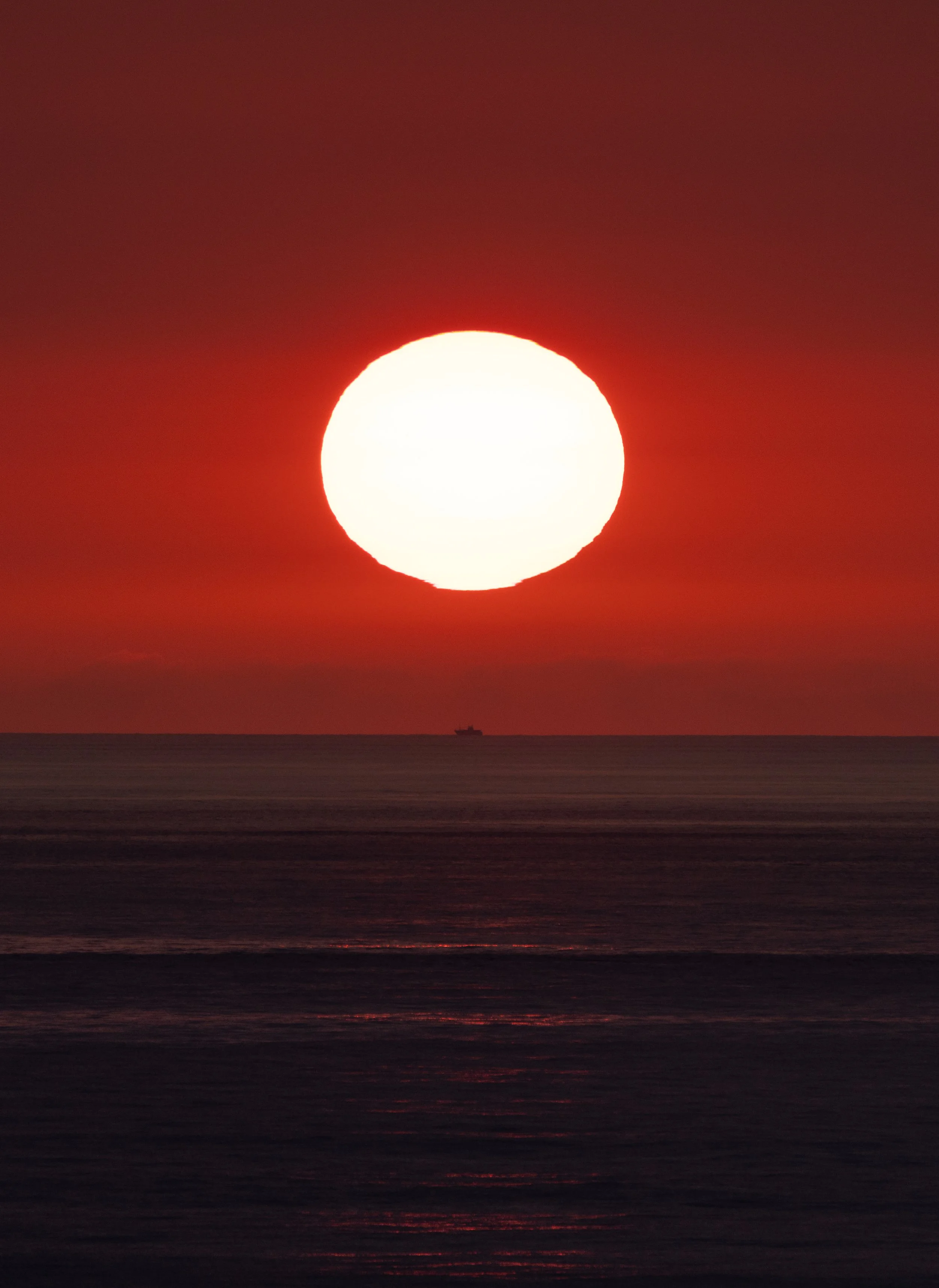
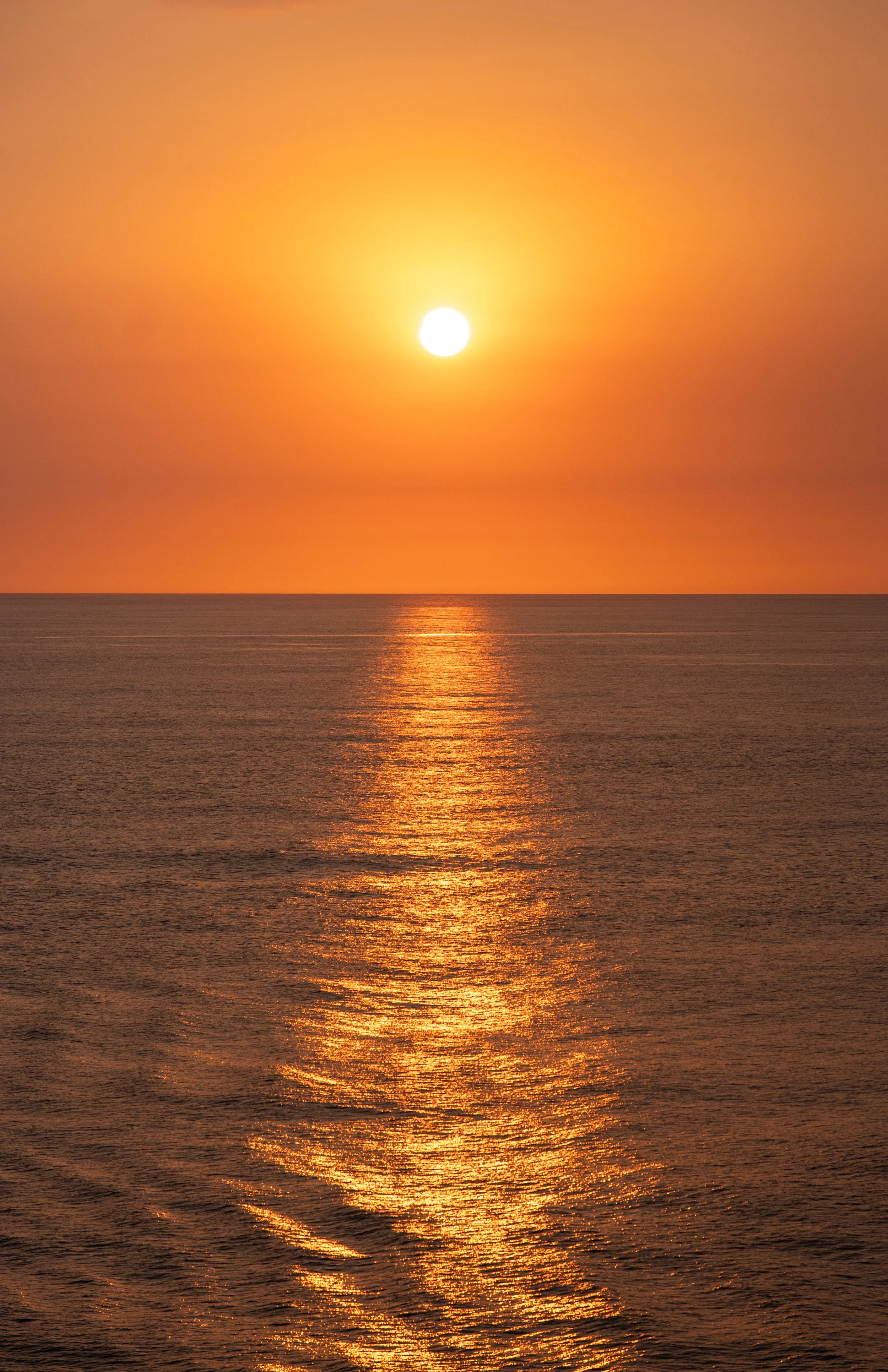
Chasing Totality at Sea
Explora III, Atlantic Ocean — 12 August 2026
There is something slightly absurd about trying to photograph one of the most precisely predictable events in astronomy from something that refuses to stay still.
We knew, almost to the second, when the Moon would begin to cross the Sun. We knew when totality would arrive, how long it would last and where the shadow would sweep across the Atlantic.
What we couldn't predict quite so easily was the sea and the clouds.
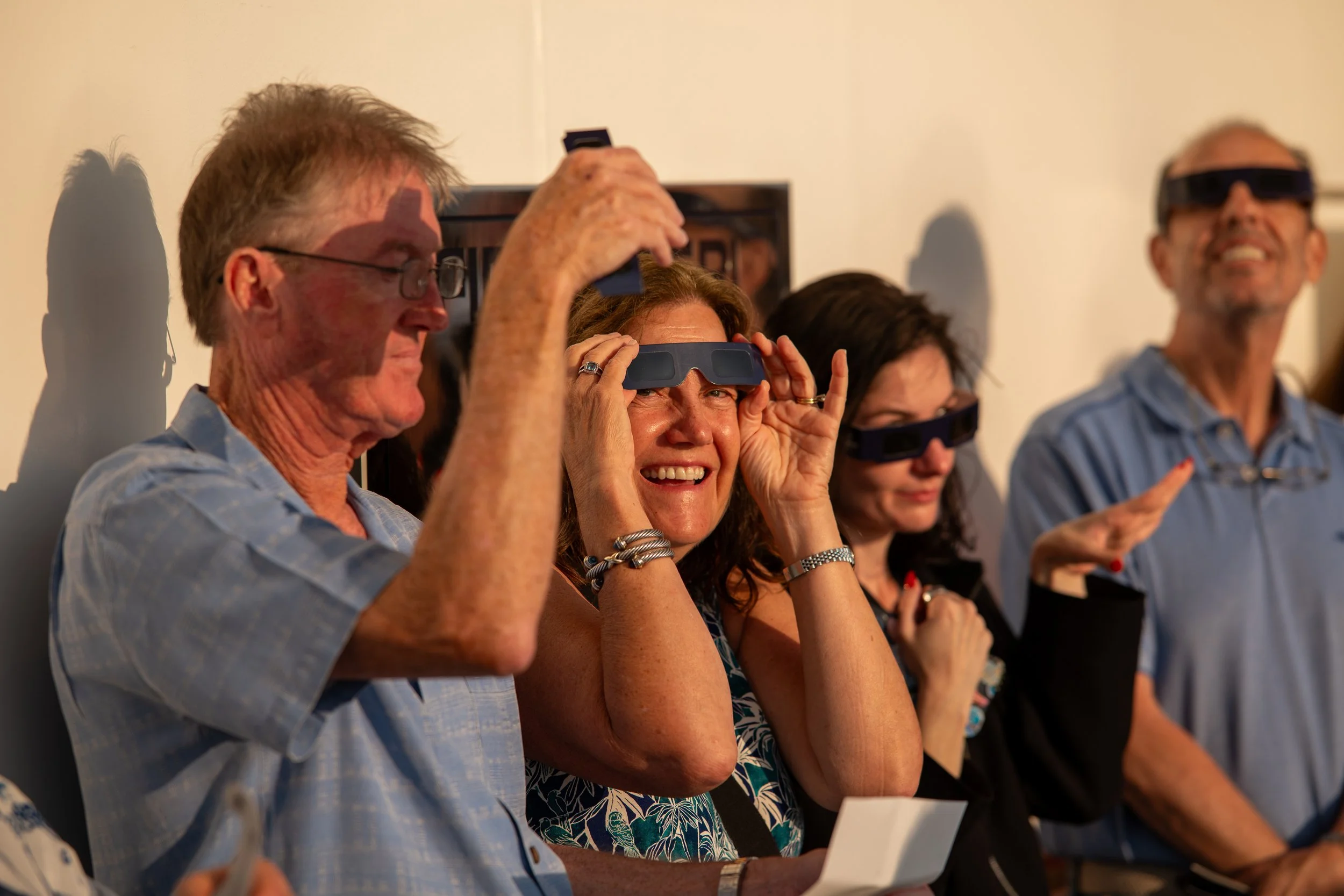
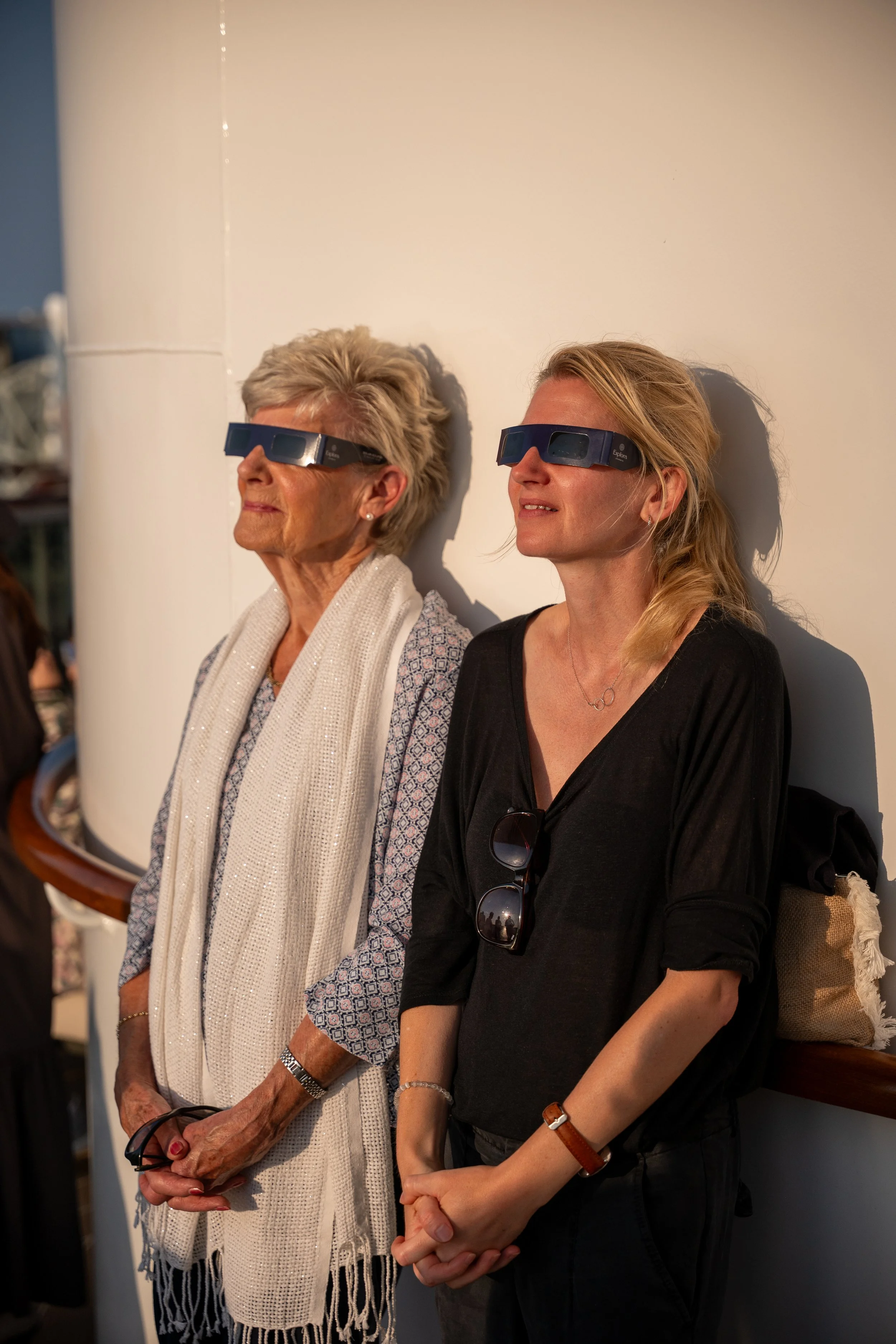
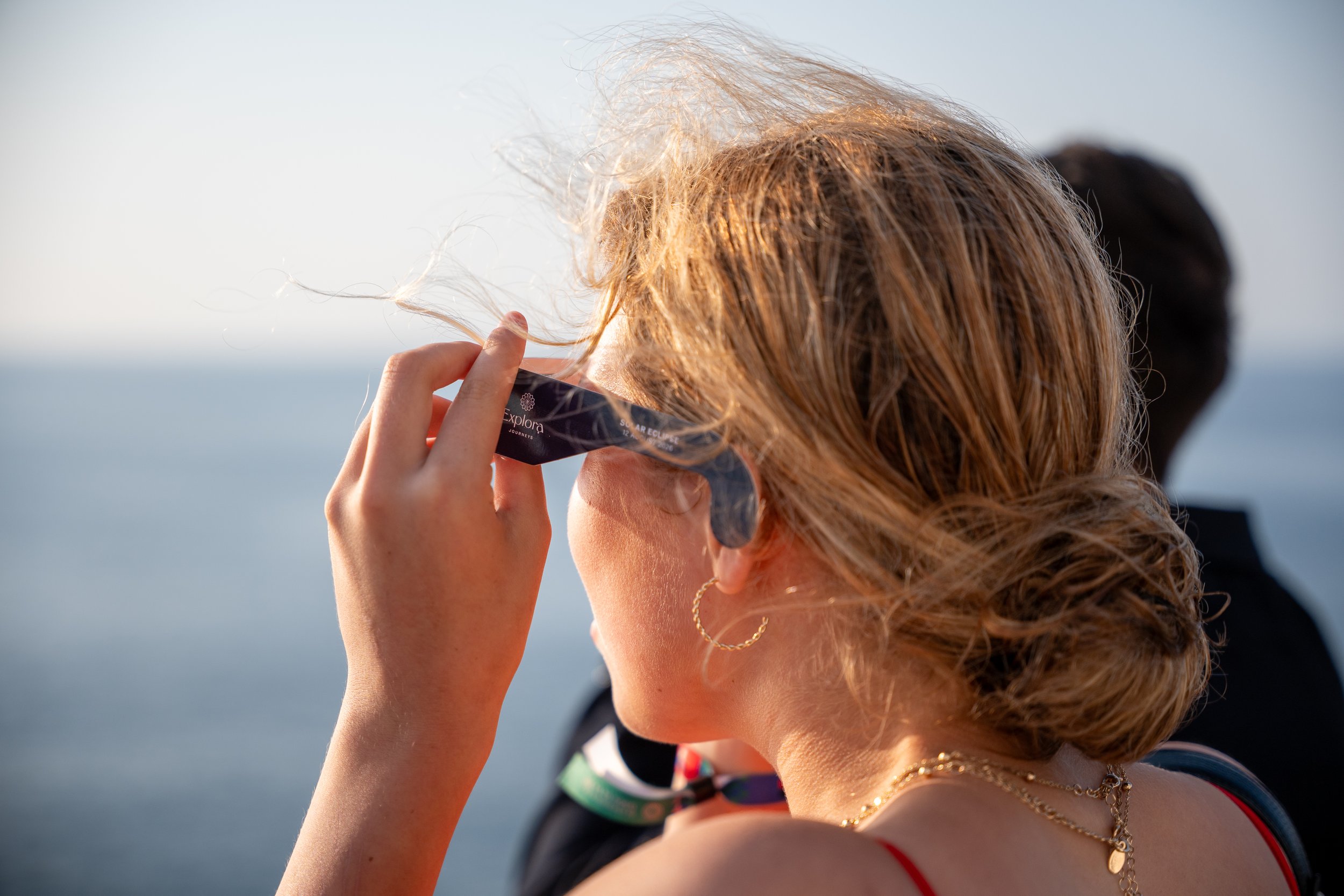
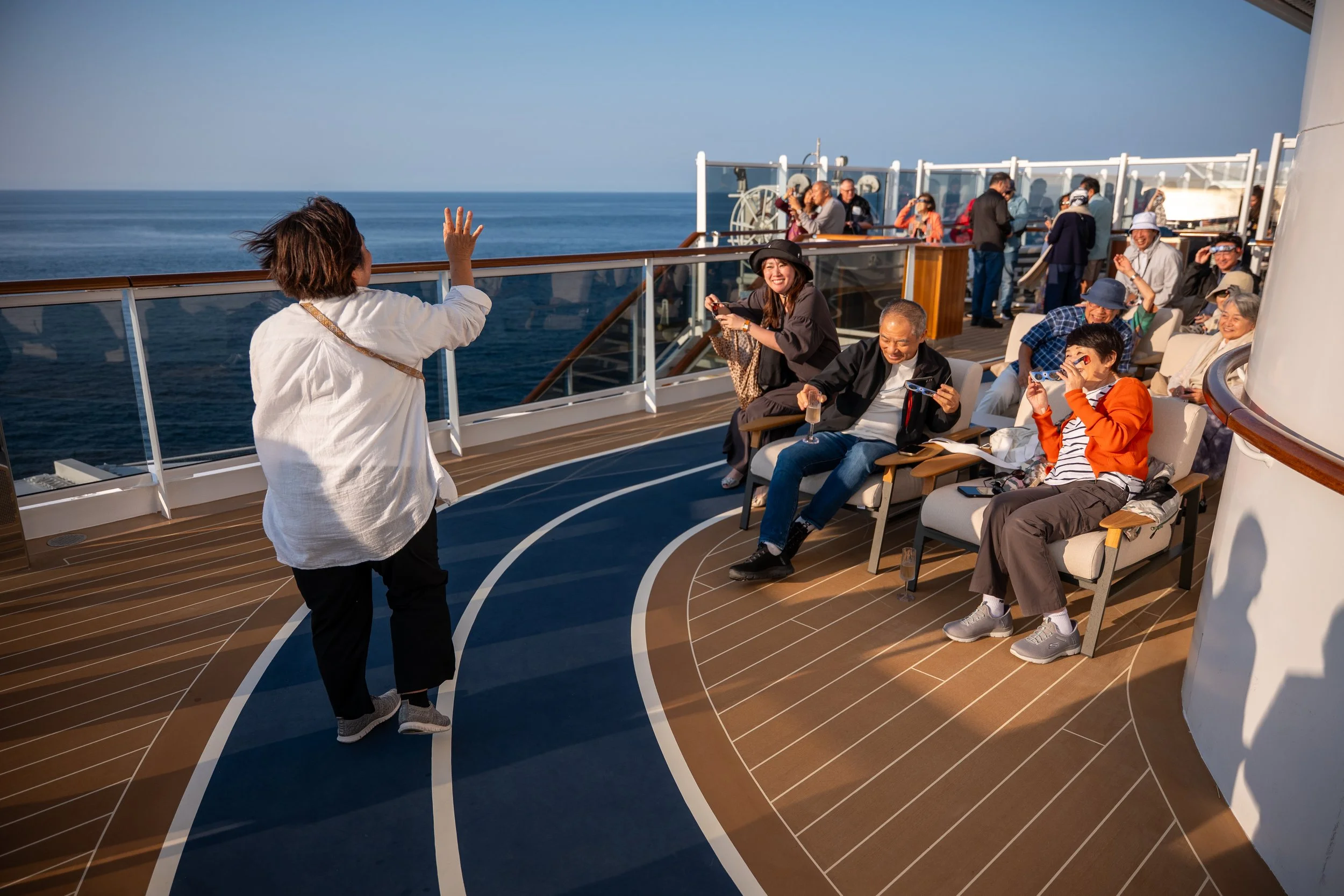
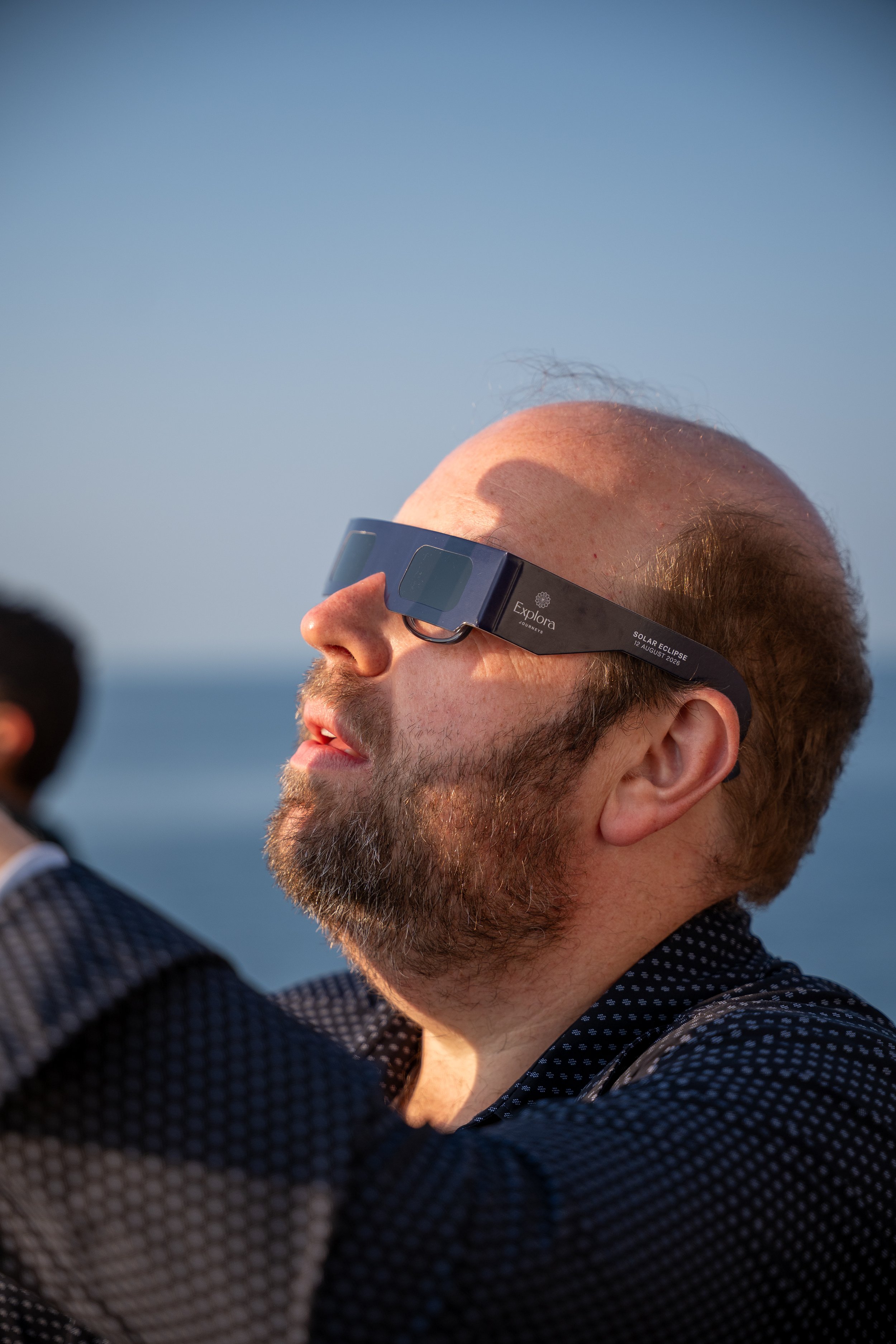
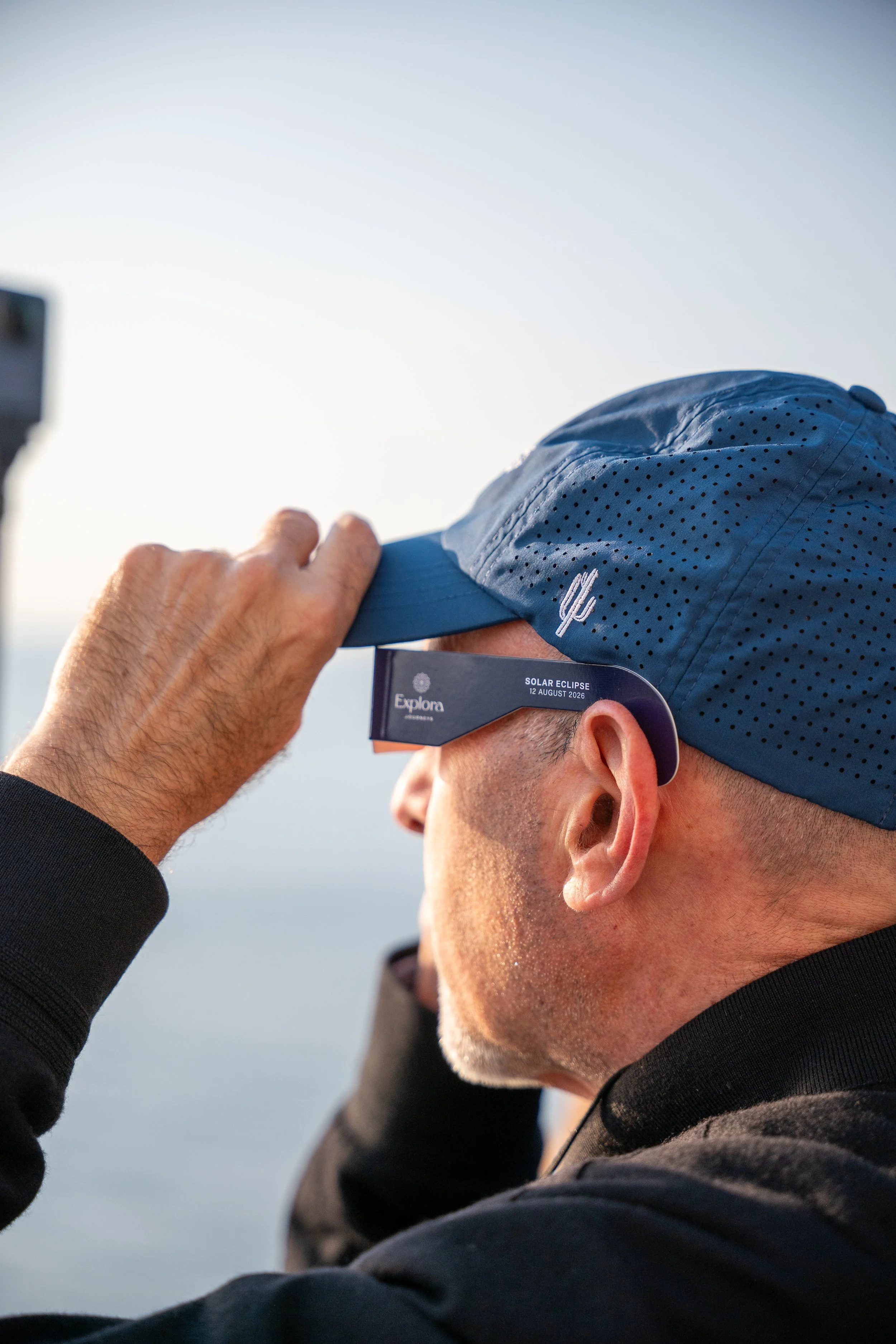
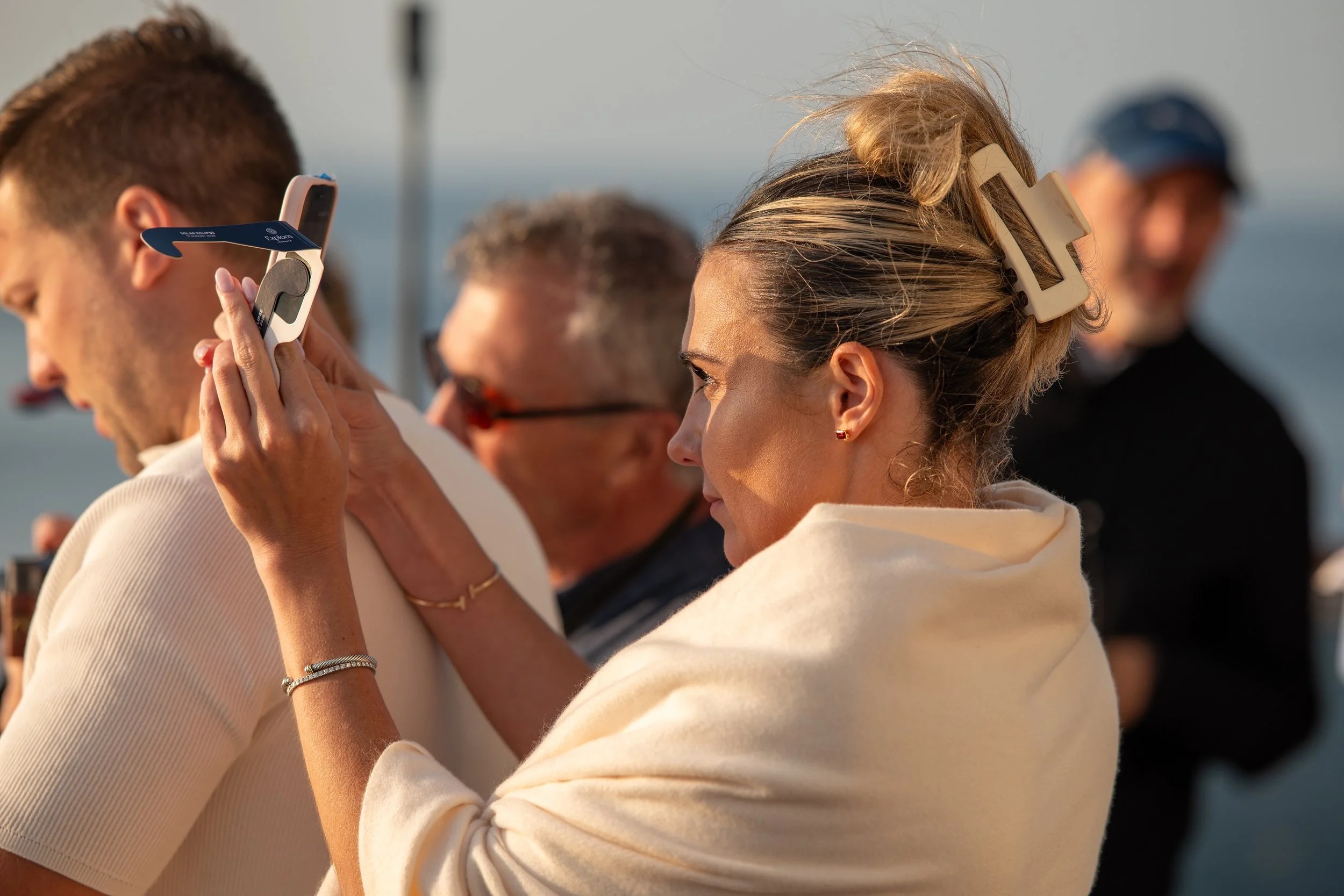
I was aboard Explora III, off the north-west coast of Spain, as part of Explora Journeys' Luminary programme. In the days around the eclipse I'd been talking about astronomy, photography and our relationship with the night sky, but this voyage had one extraordinary centrepiece: the total solar eclipse of 12 August 2026.
Before the shadow
My eclipse talk, When the Sun Disappears, was really about understanding the event before experiencing it.
A total solar eclipse is one of those rare occasions when orbital mechanics stops being something abstract. The scale of the Solar System suddenly becomes visible.
The Sun is roughly 400 times larger than the Moon, but it is also around 400 times farther away. From our particular point in space and time, the two can therefore appear almost exactly the same size in the sky.
We talked about the Moon's shadow crossing Earth, why eclipses don't happen every month, what people might notice as the light changed, the appearance of the corona and the extraordinary coincidence that allows total eclipses to exist at all.
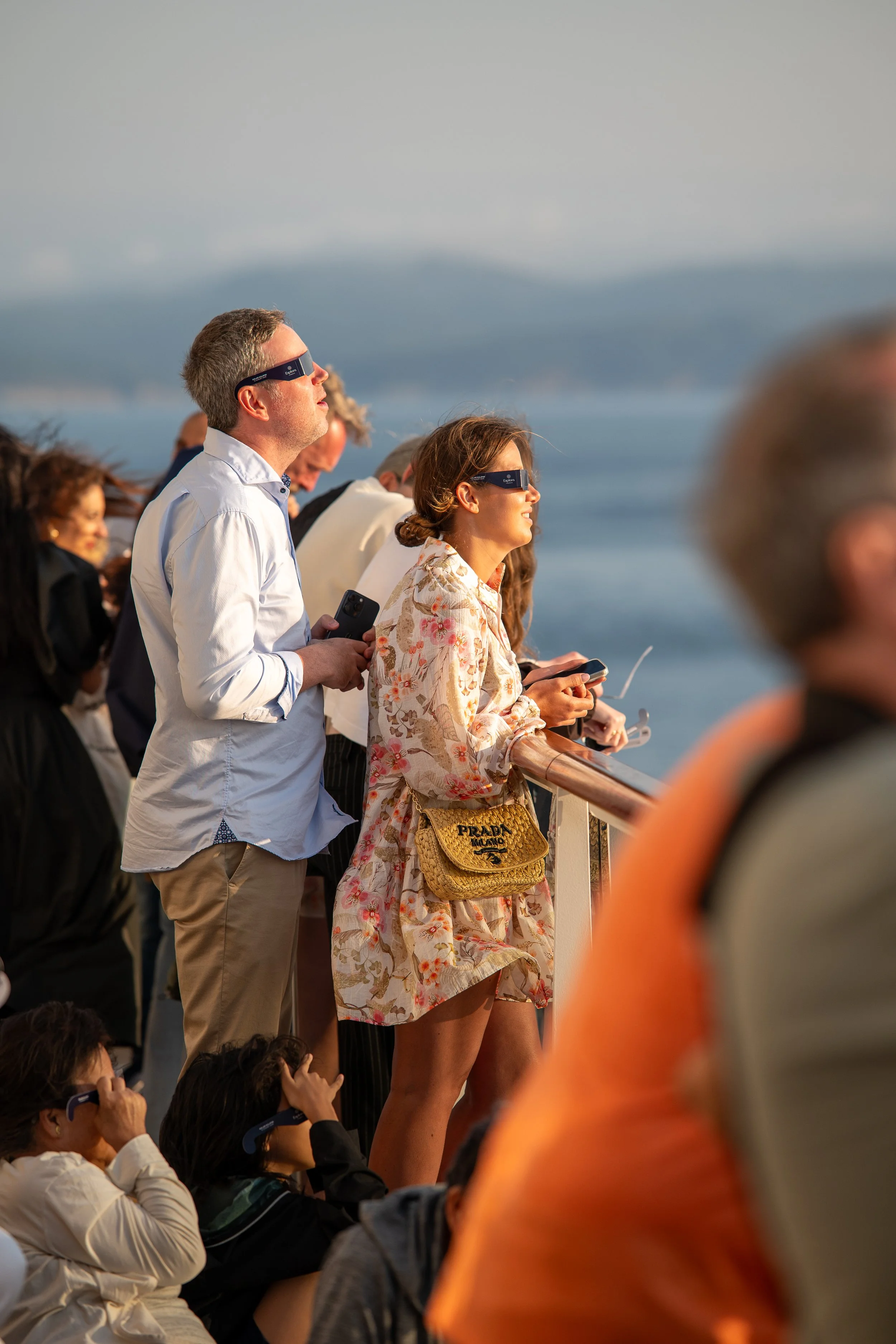
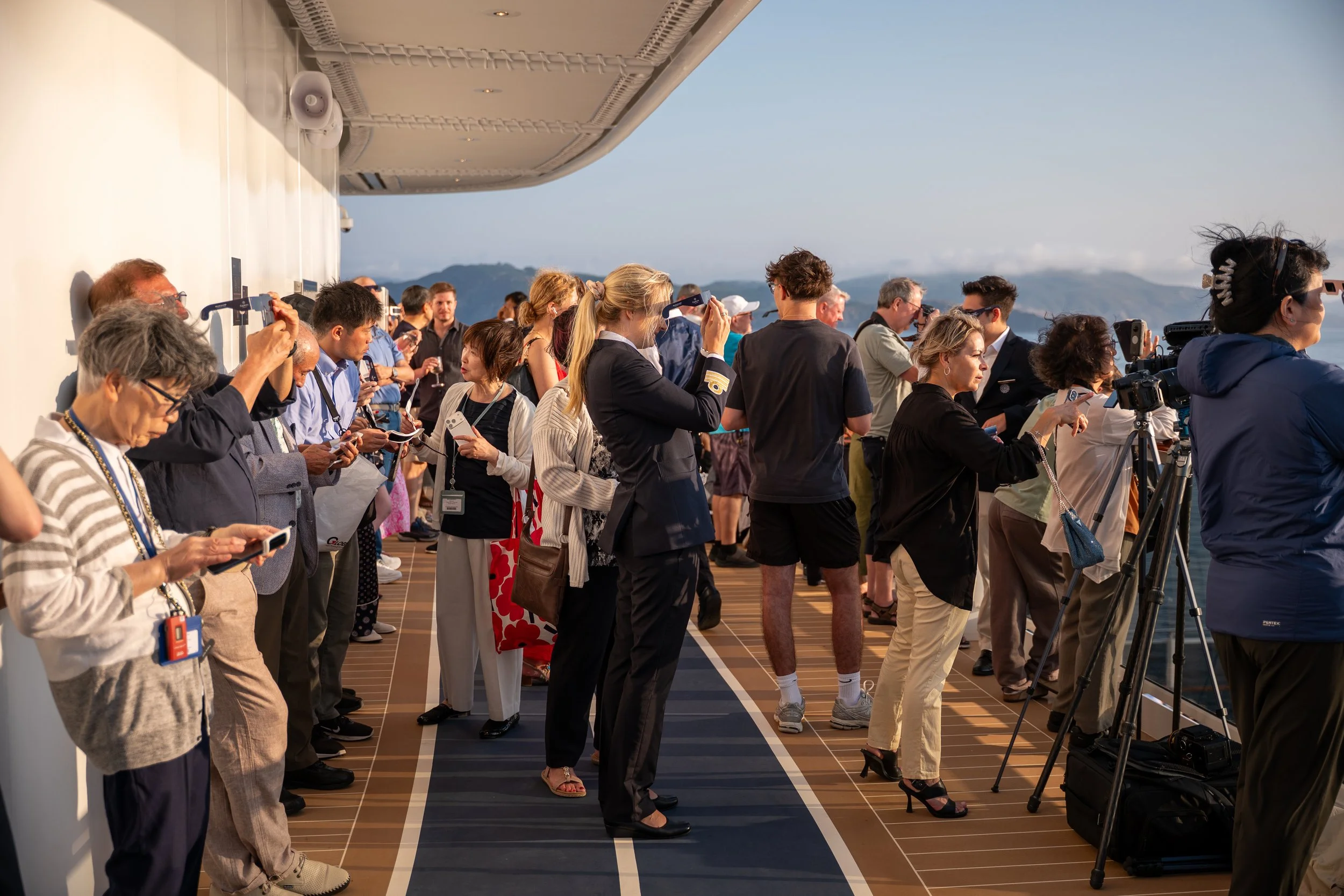
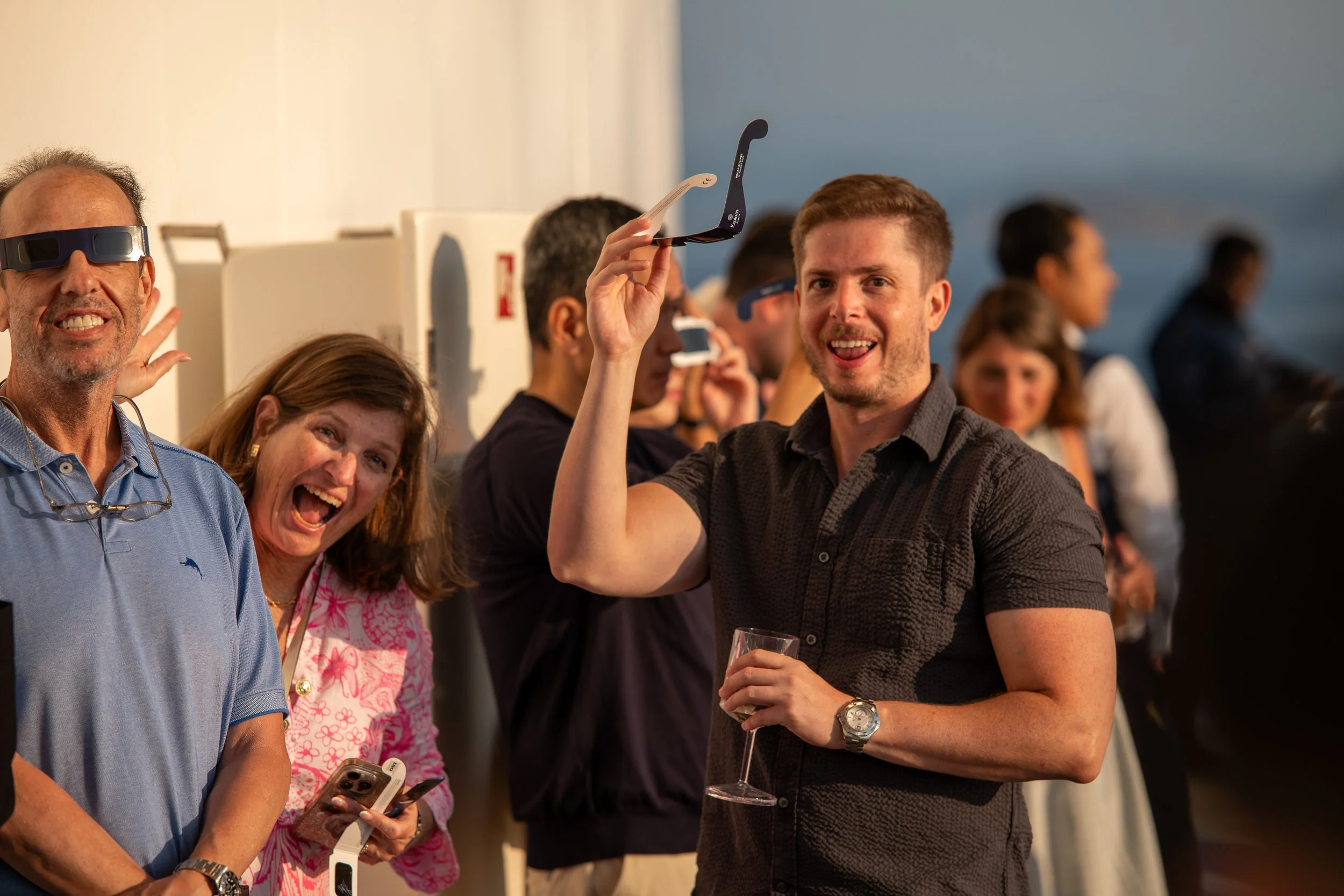
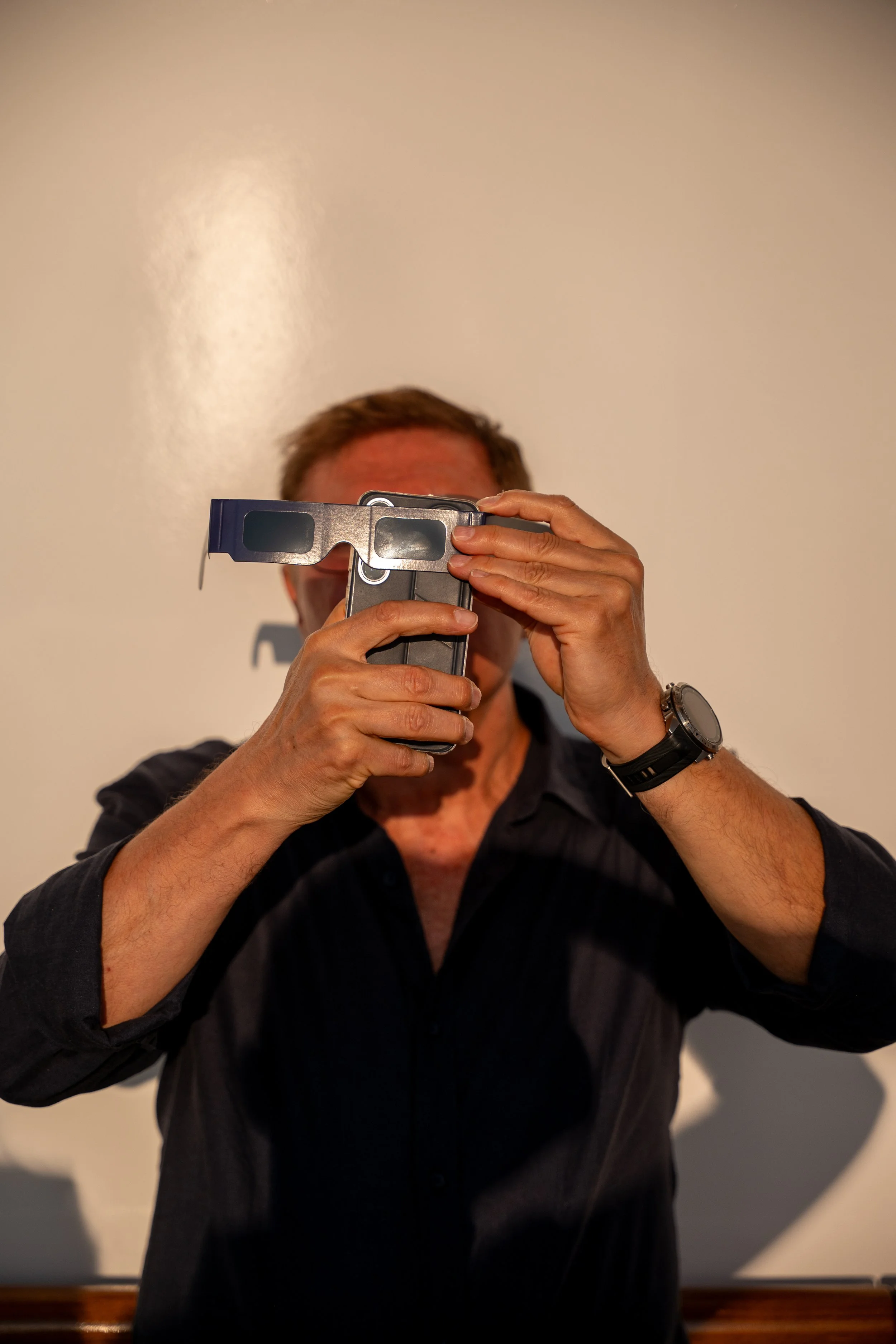
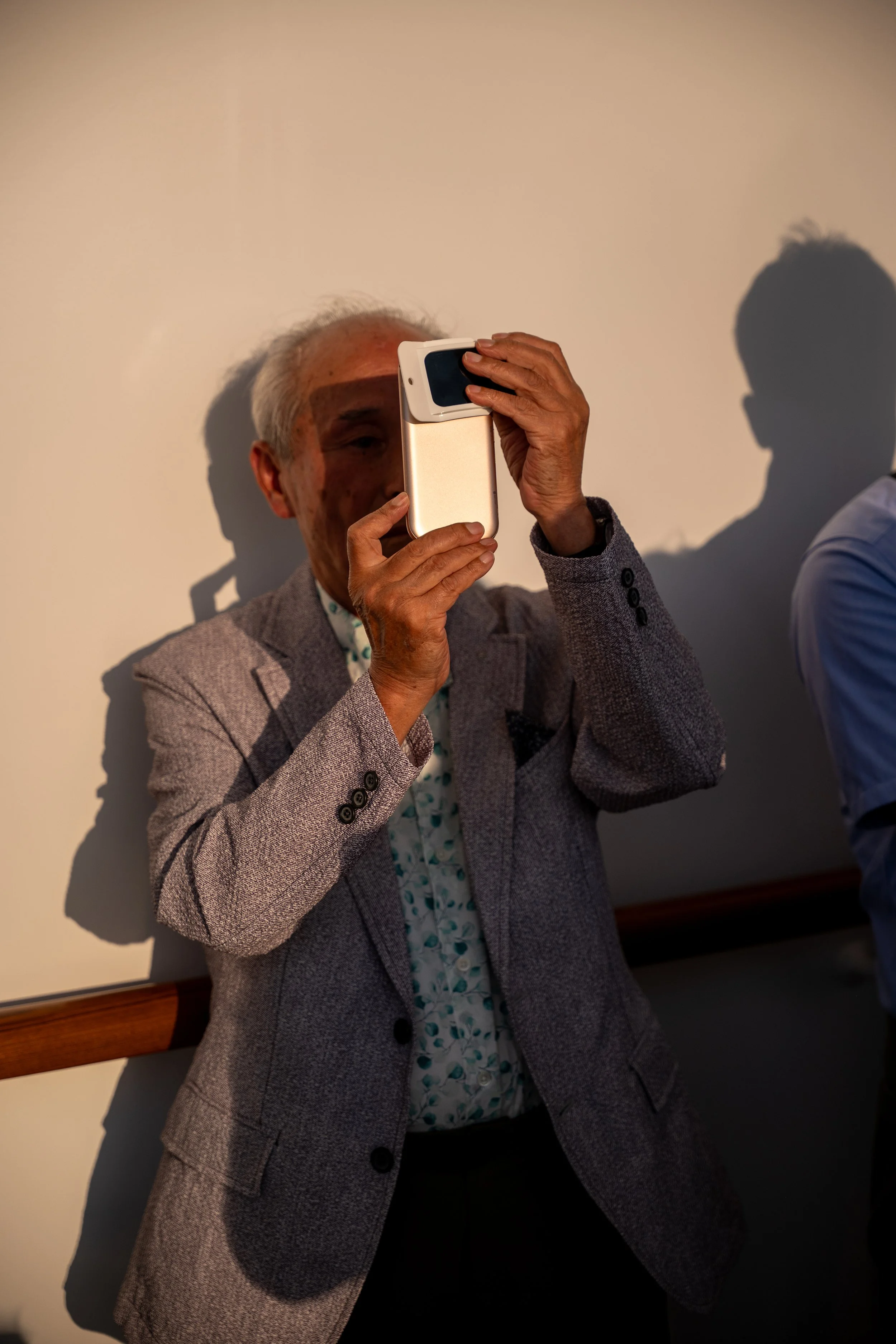
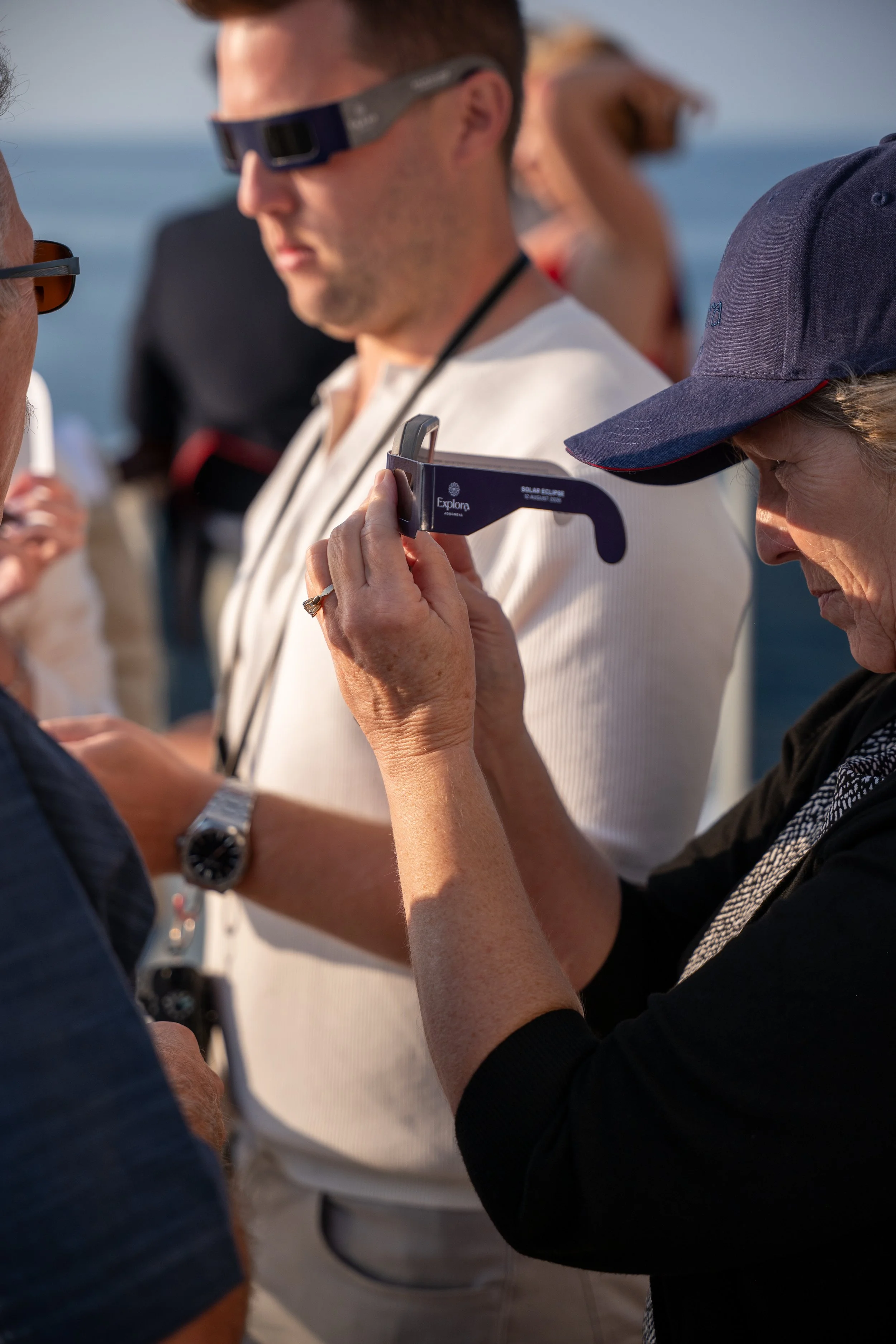
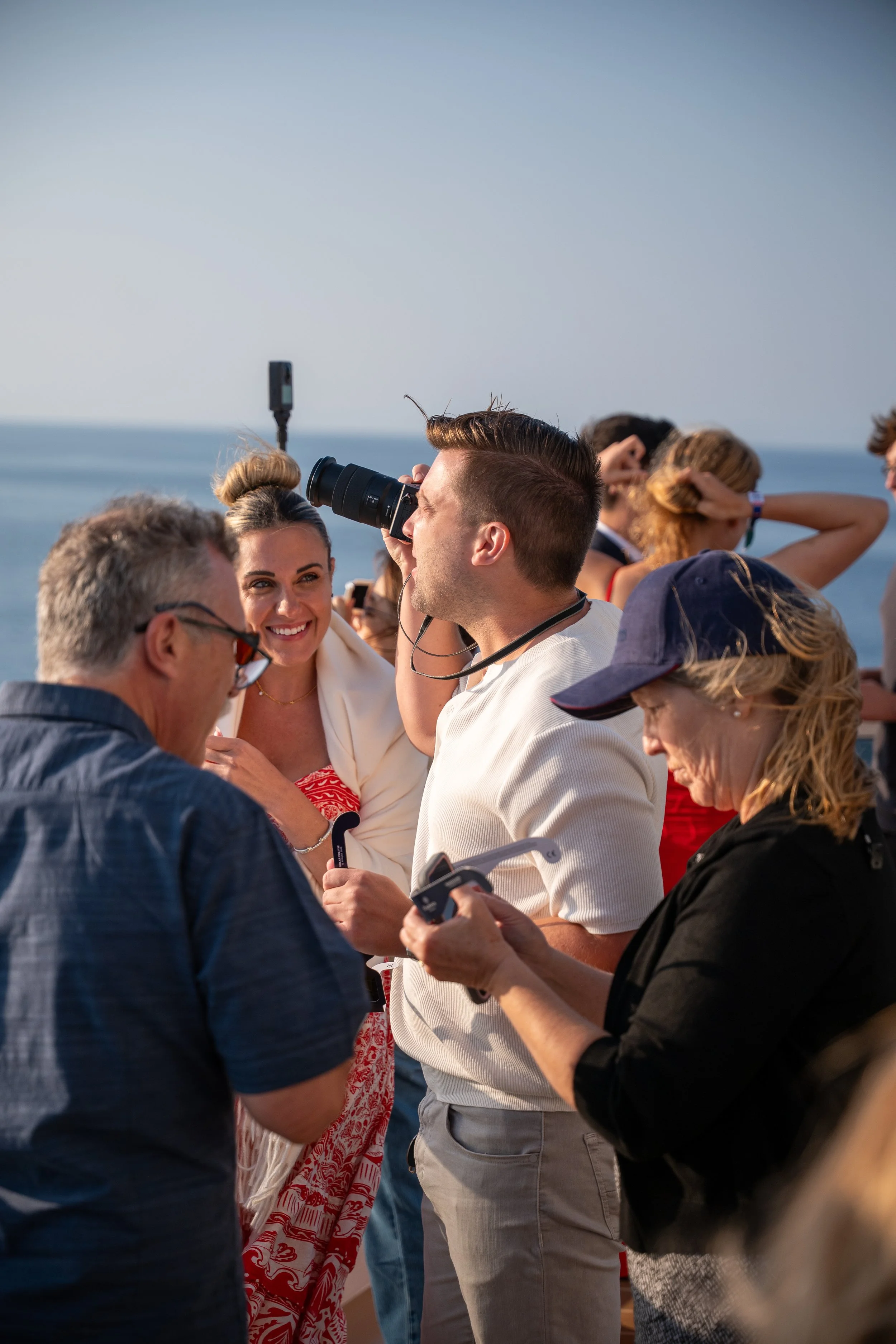
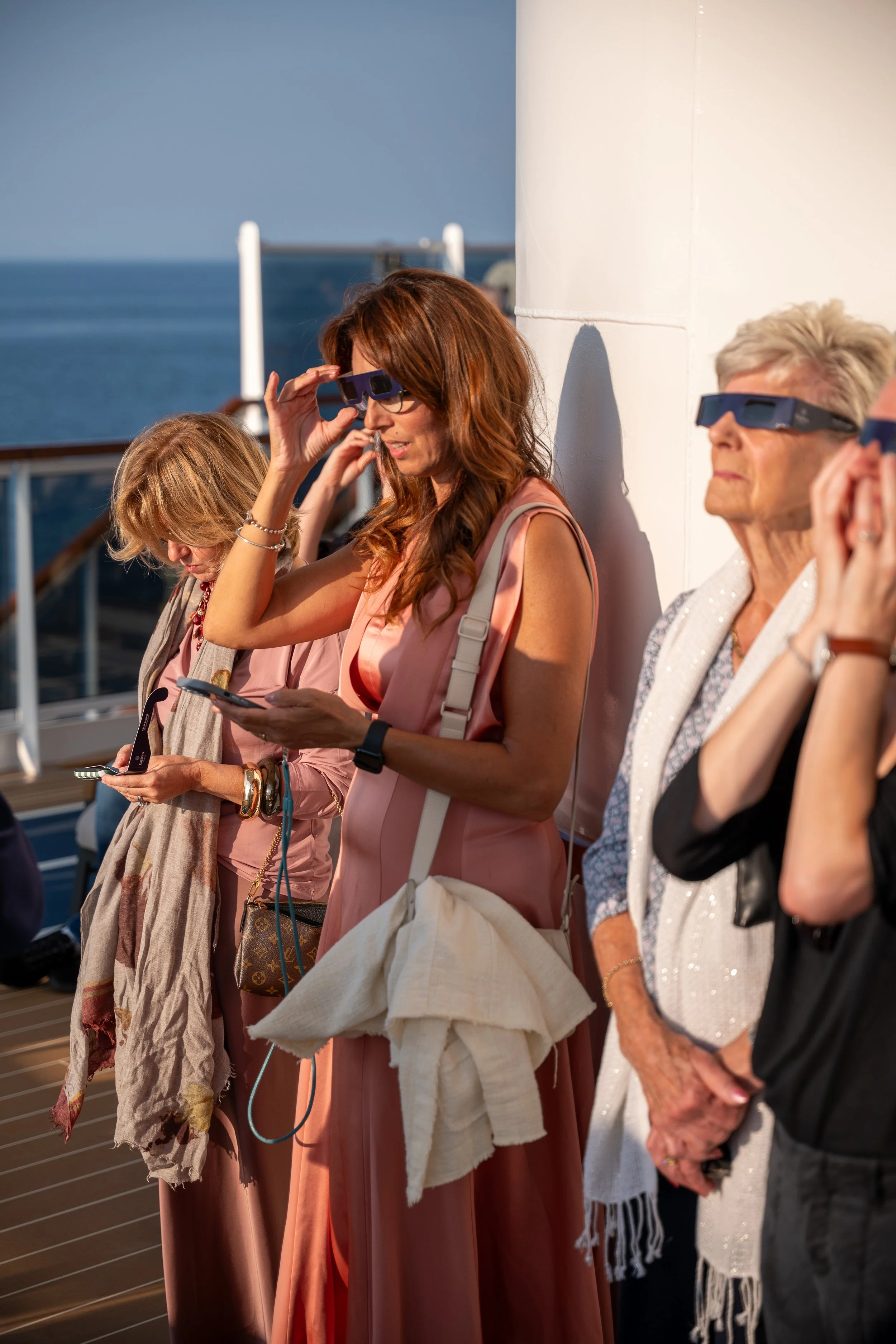
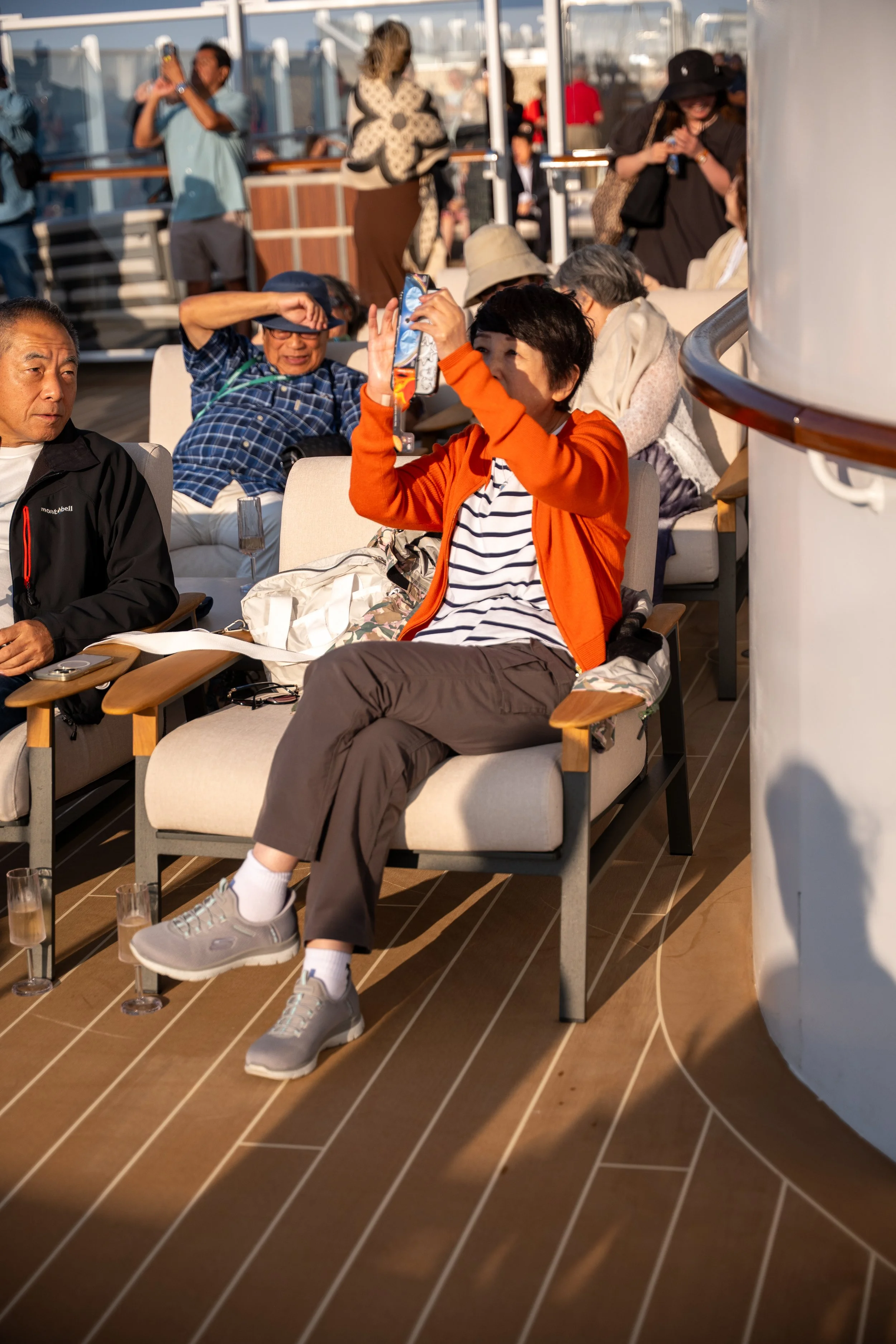
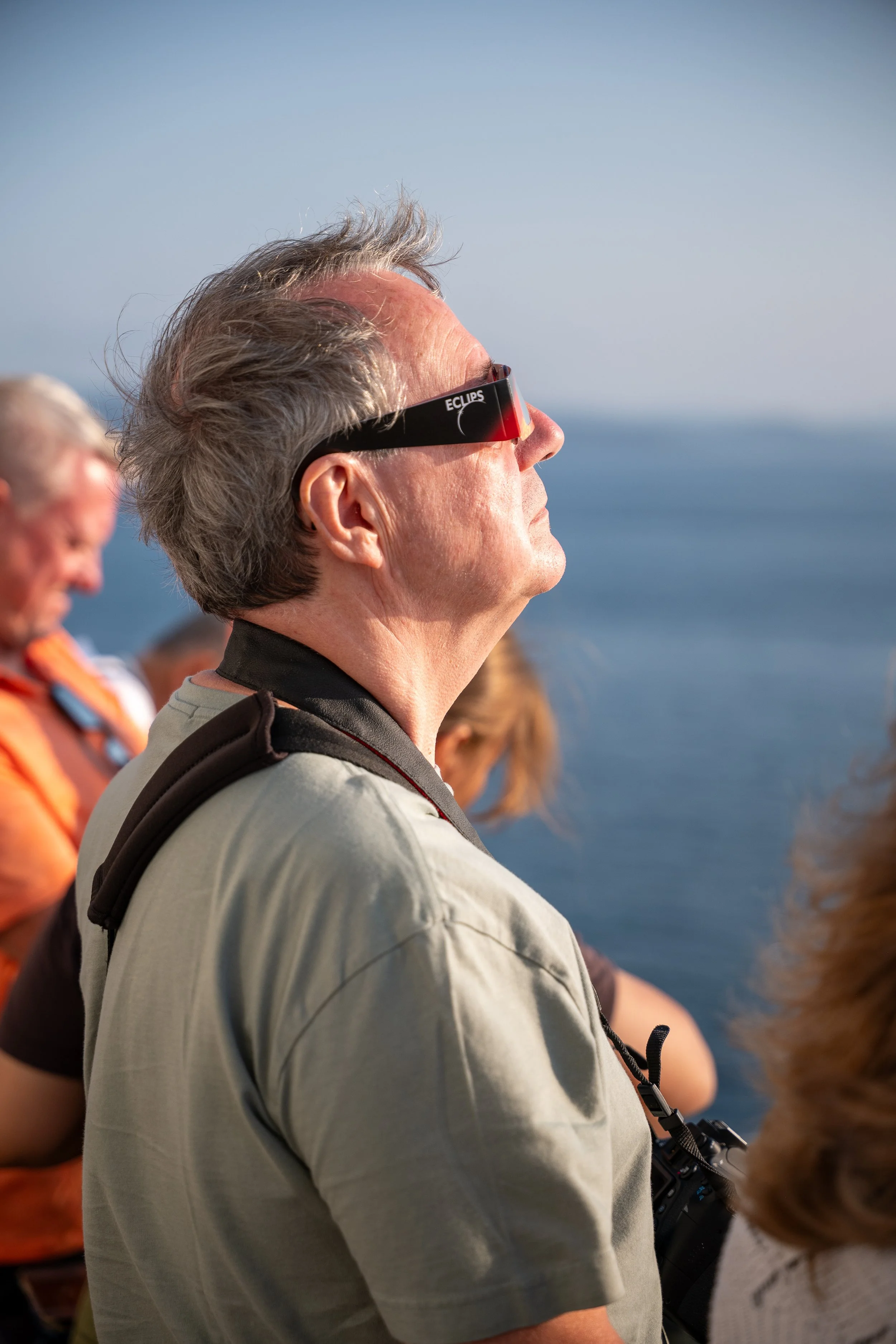
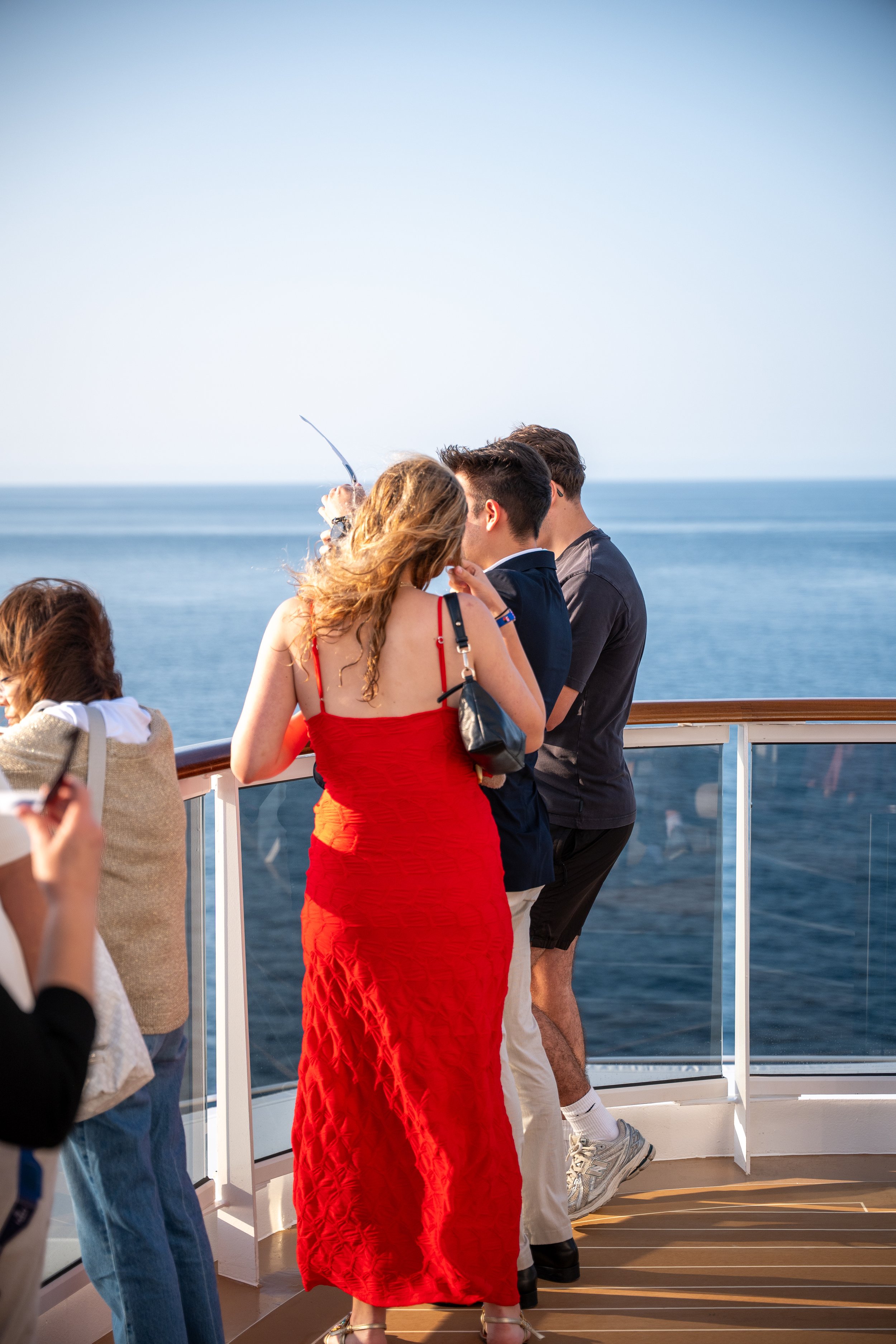
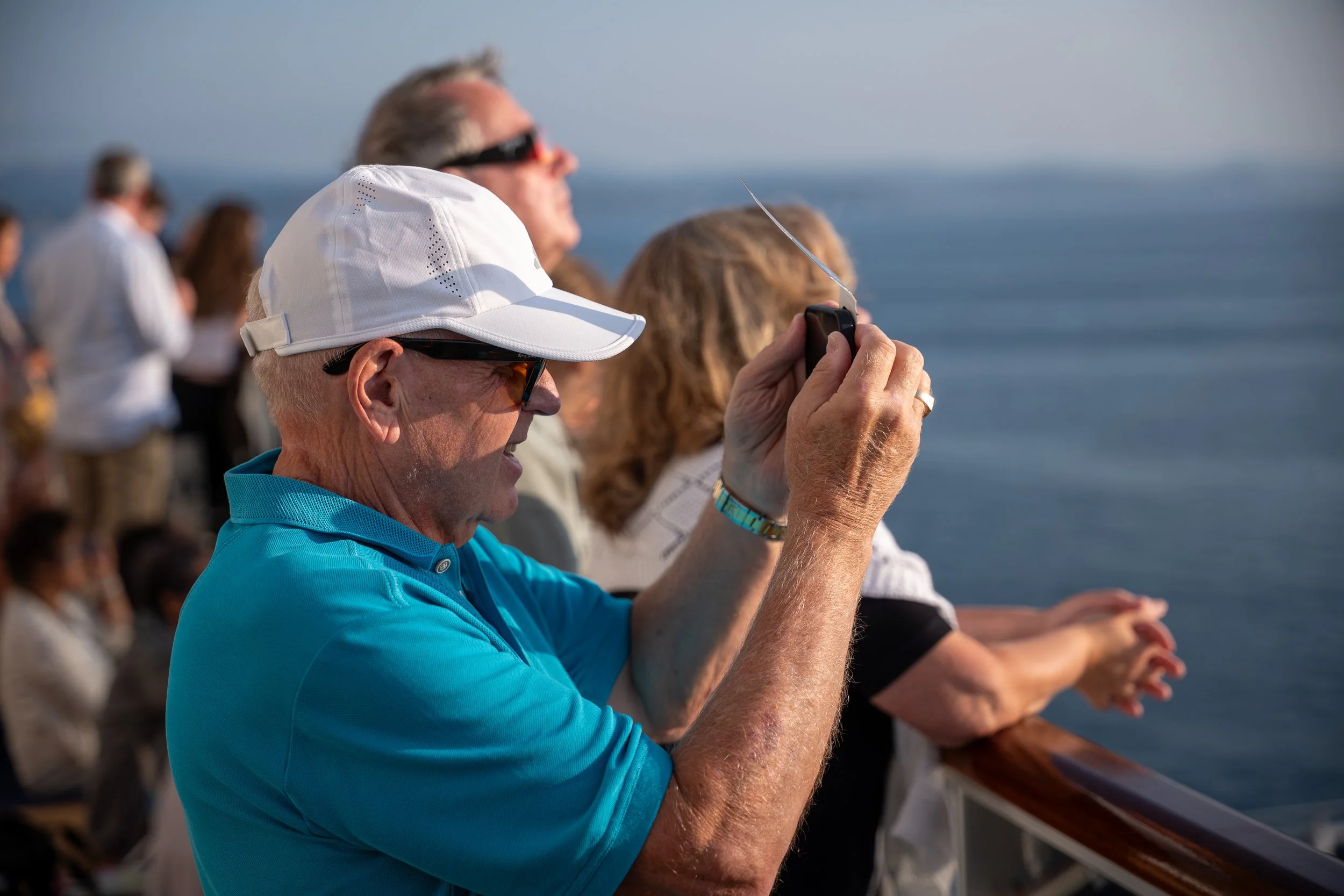
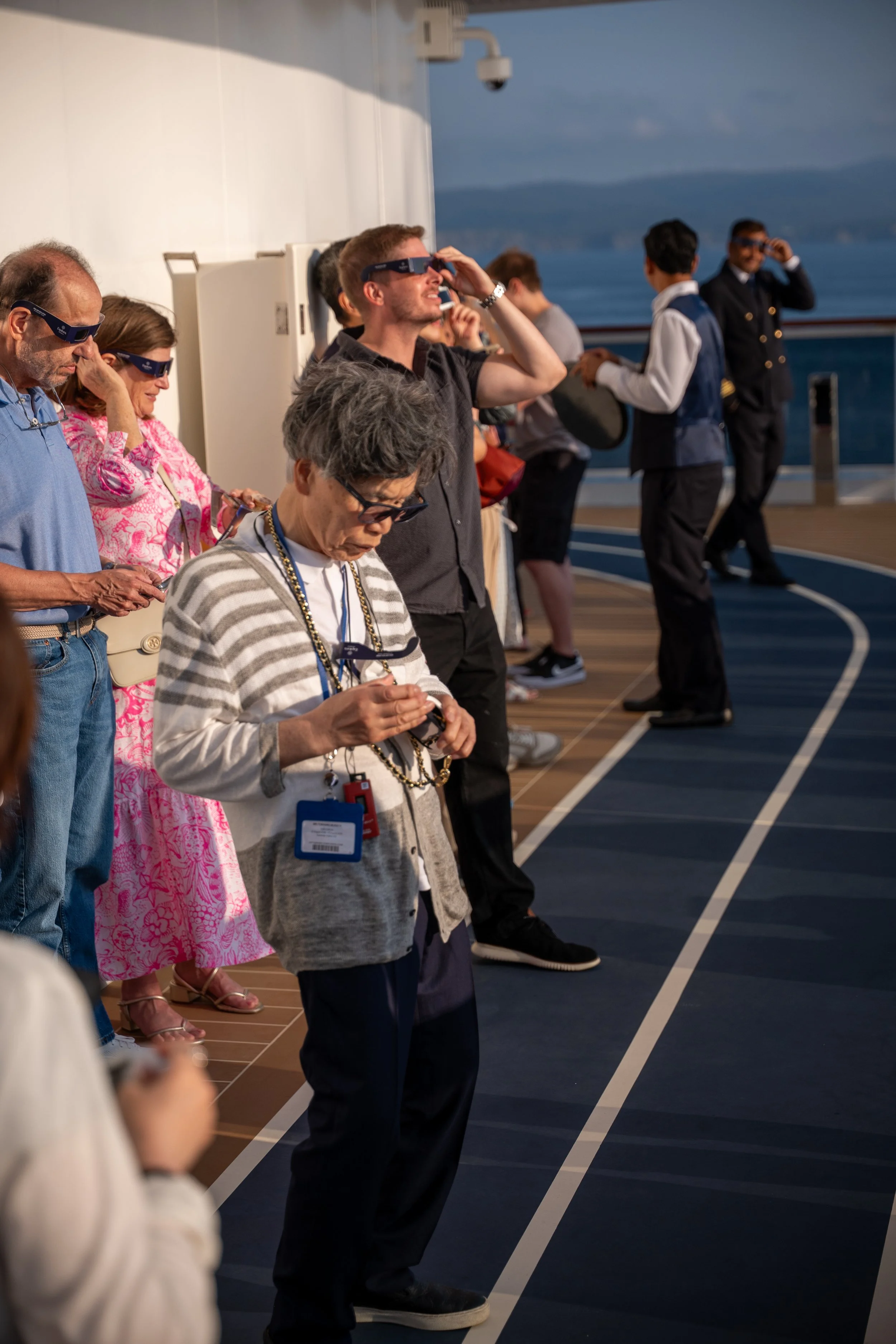
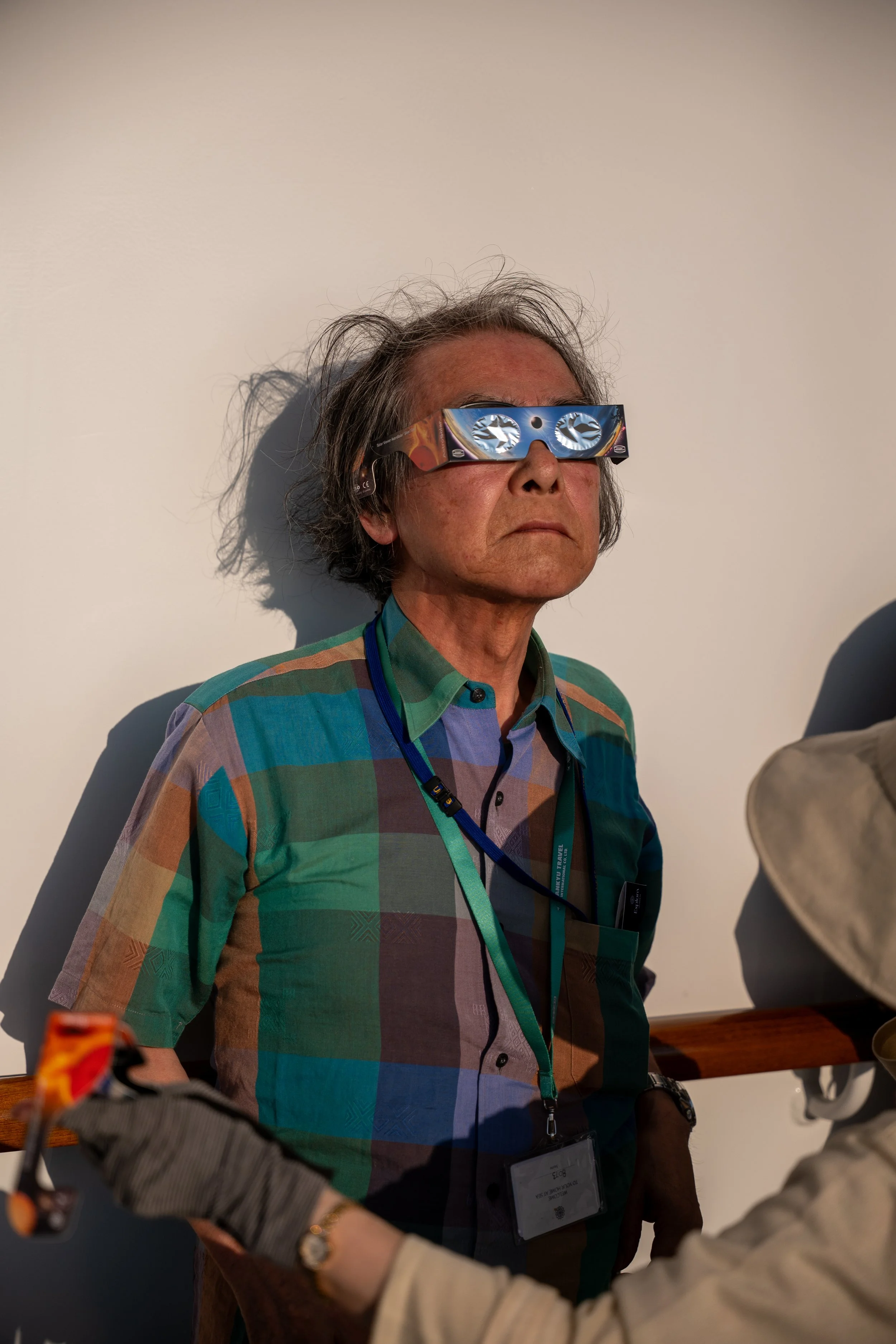
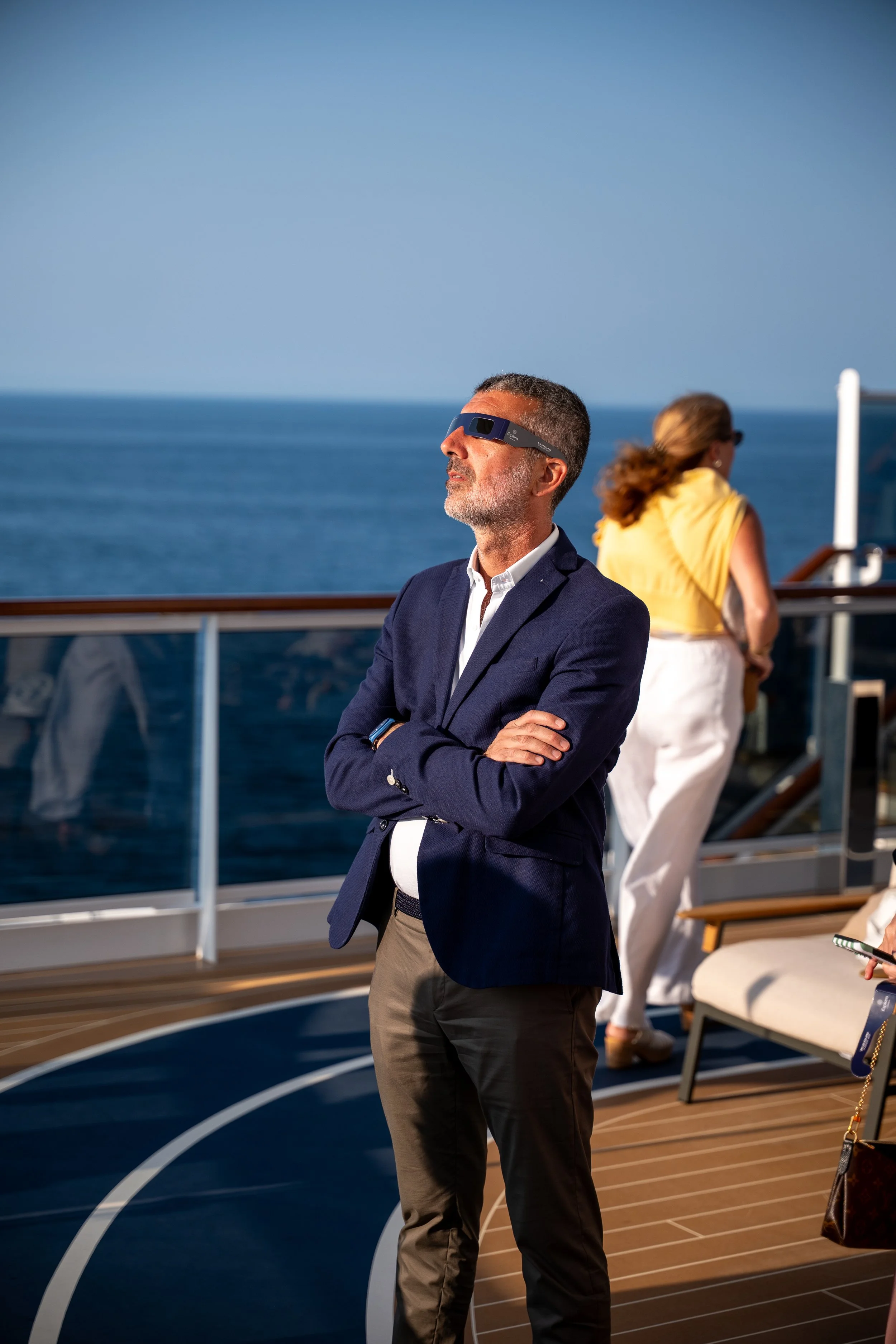
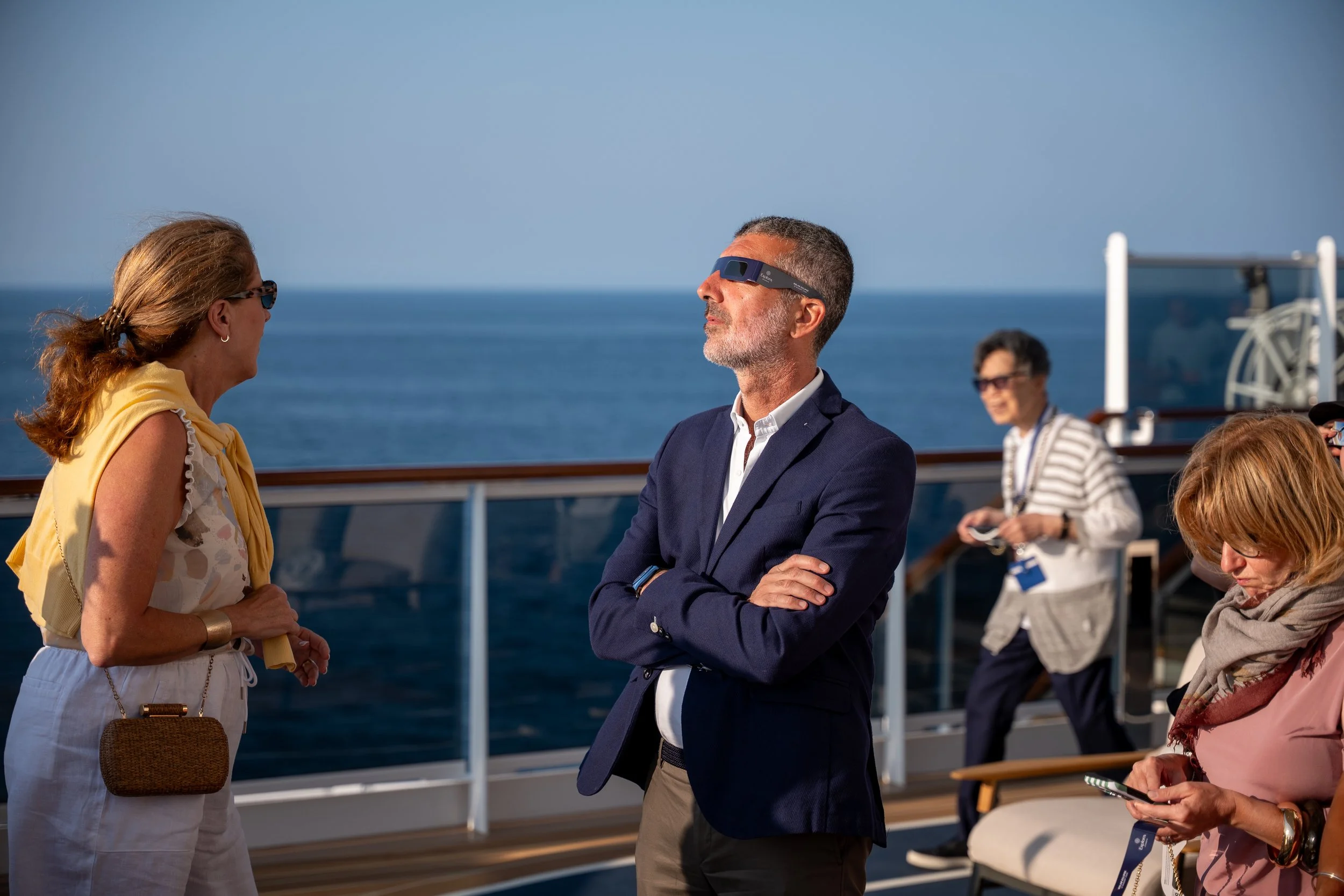
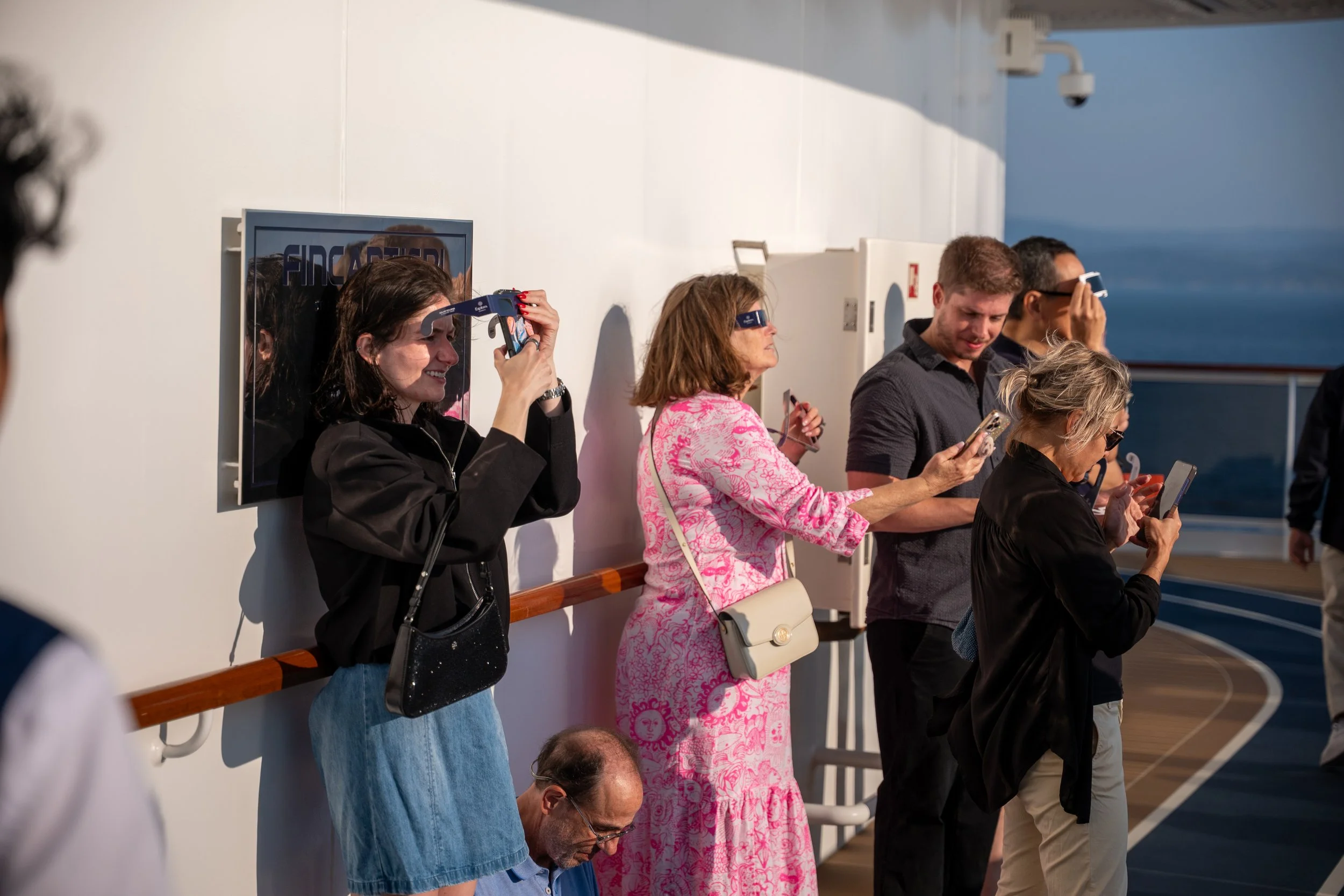
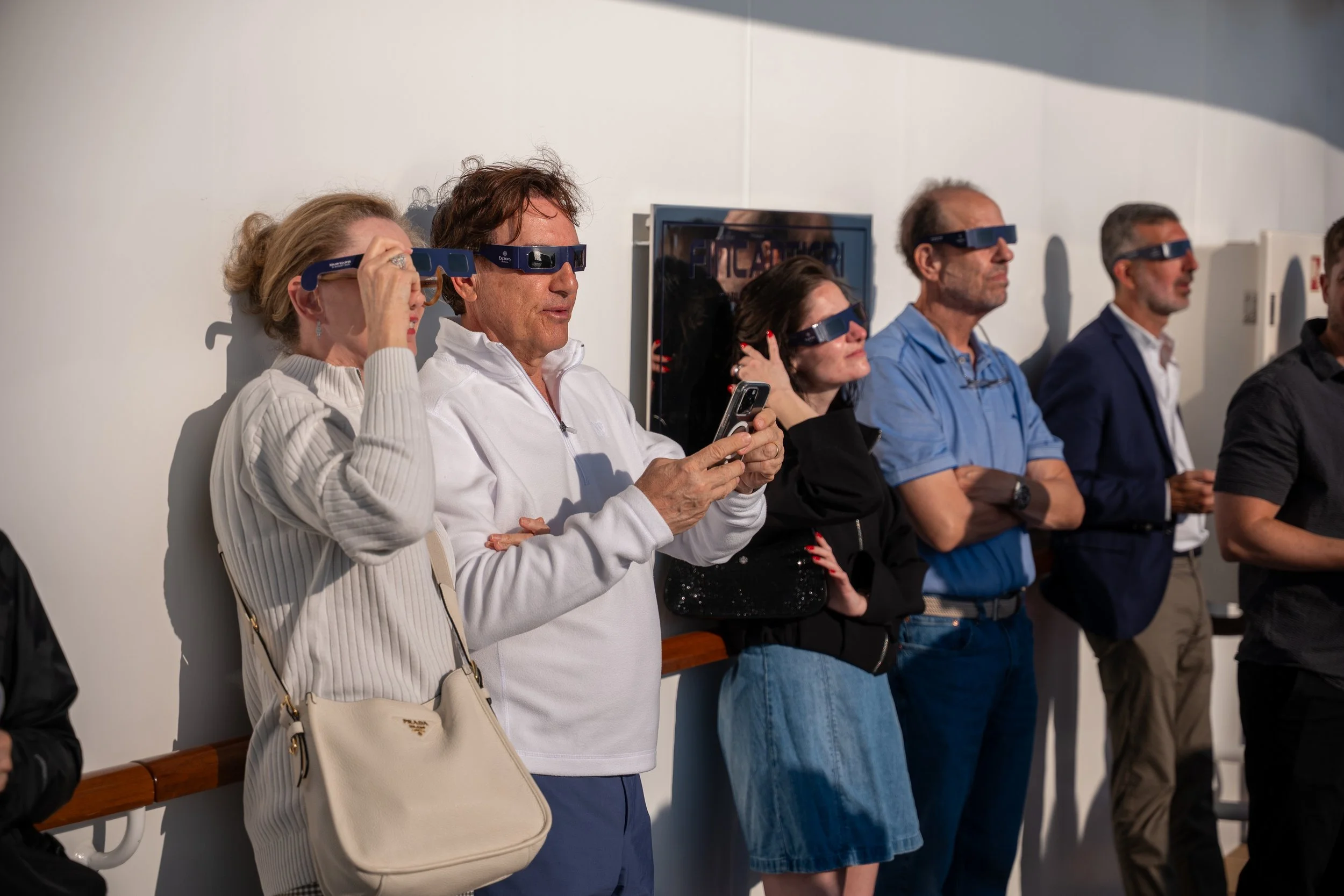
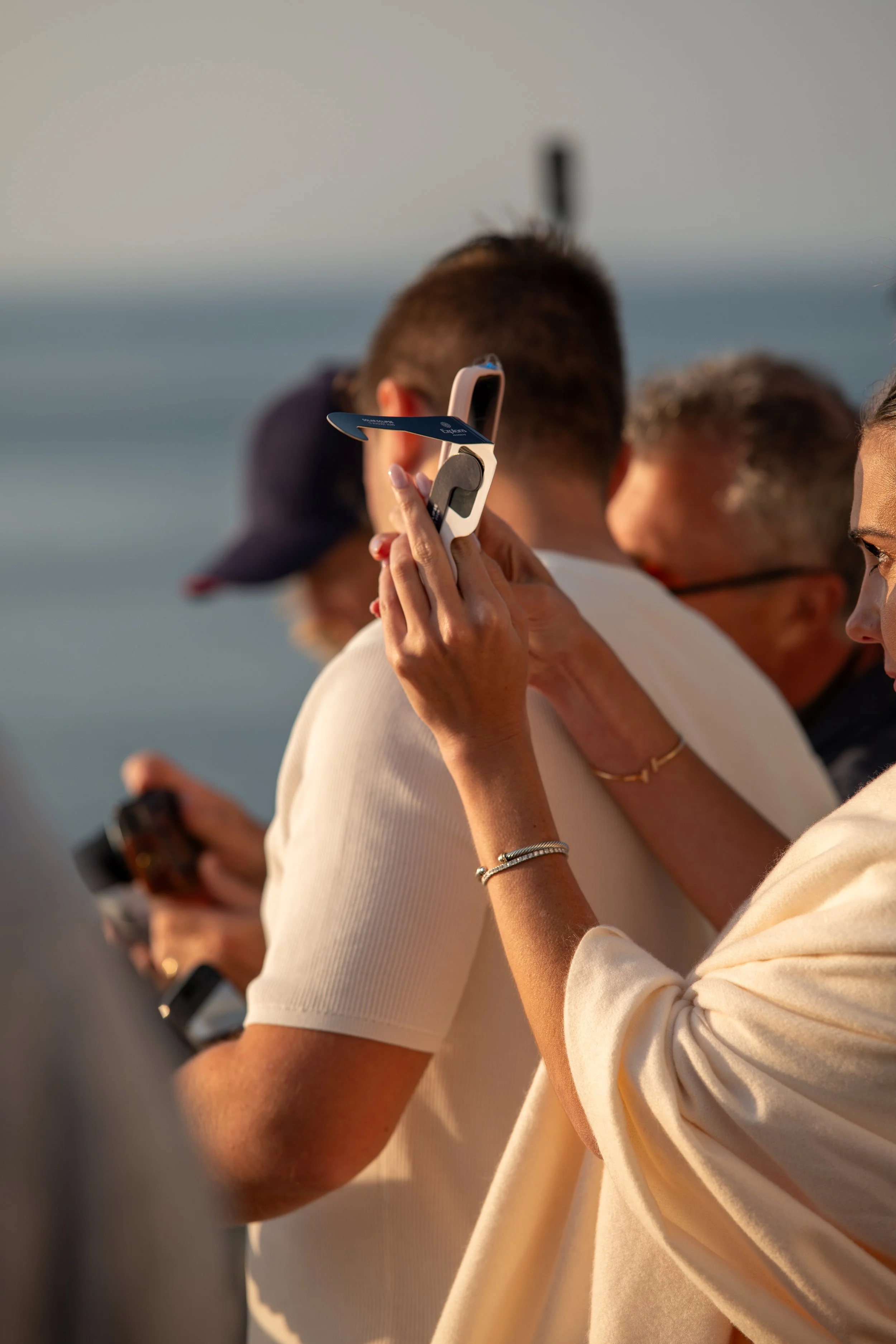
And then, not long afterwards, we went outside to watch the thing itself.
There's an interesting responsibility in explaining an eclipse immediately before one happens. You can describe Baily's beads, the diamond ring and the corona as much as you like. You can show diagrams and simulations.
None of them quite prepare you for seeing the Sun disappear.
Photographing an eclipse on a moving ship
Photographing it was another matter entirely.
On land, eclipse photography is largely an exercise in preparation: choose the composition, align the tripod, focus carefully and wait for the sky to perform.
At sea, the horizon moves.
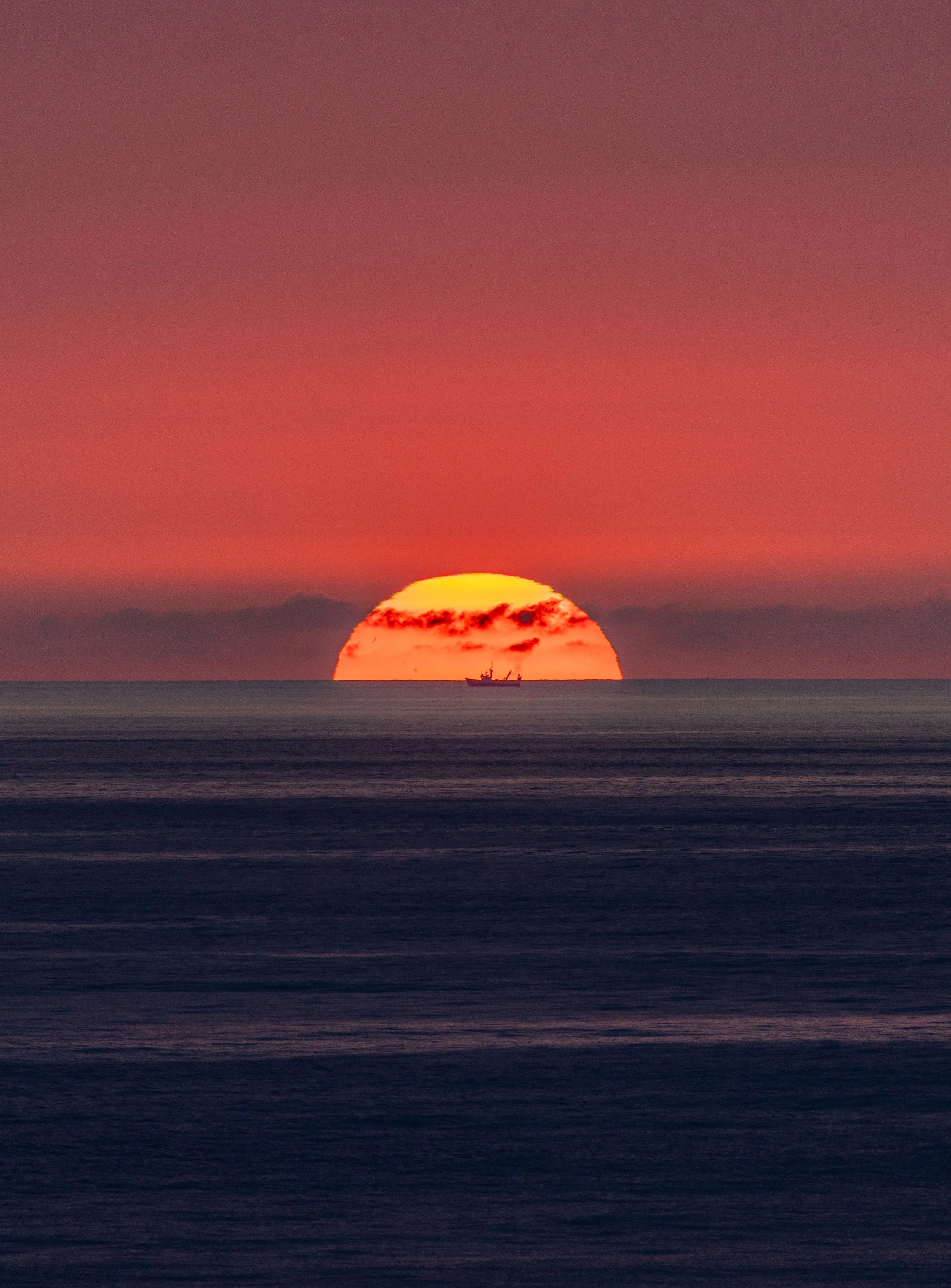
The deck rolls beneath you. The ship changes heading. The apparent position of the Sun shifts through the frame. A long lens magnifies every tiny movement.
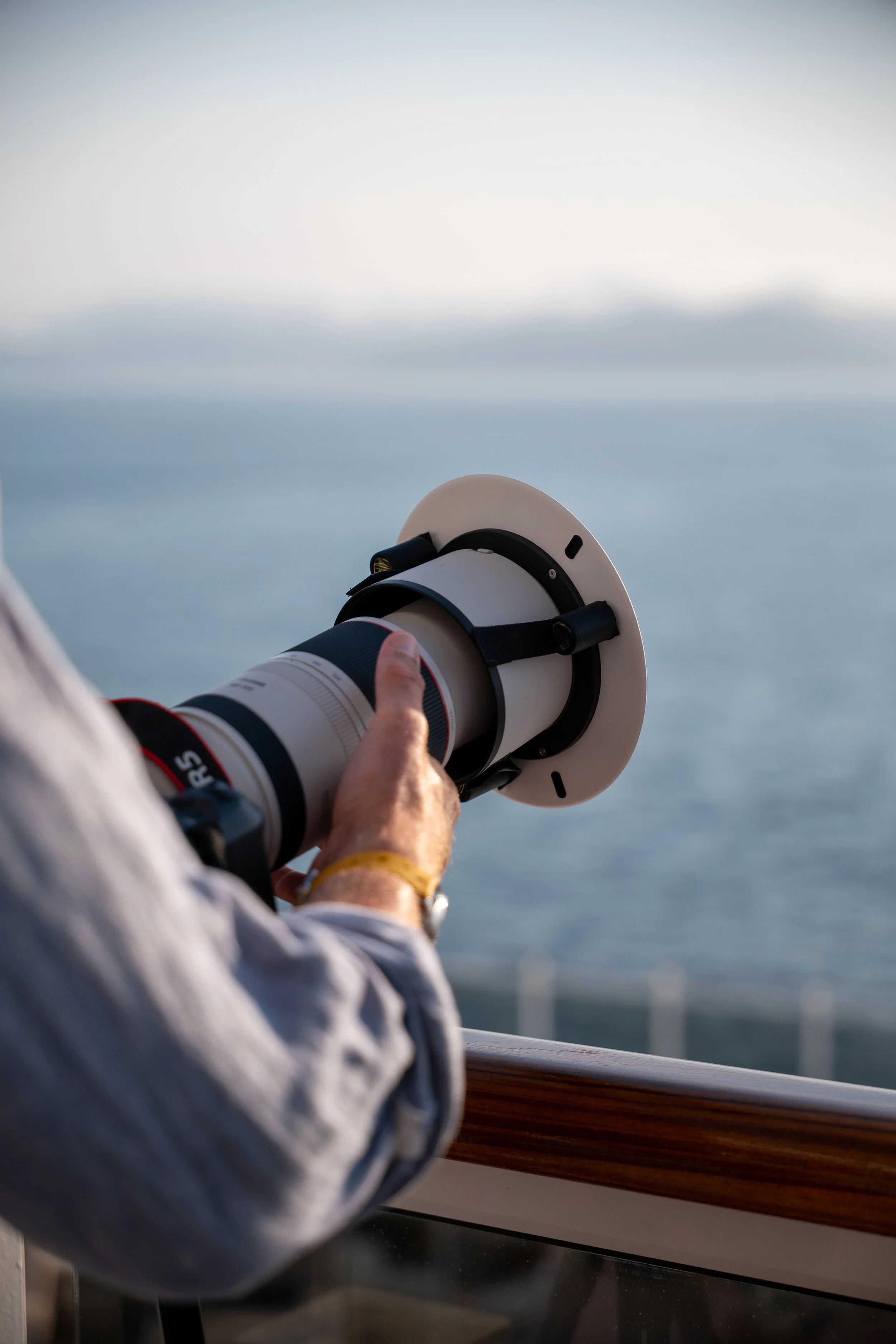
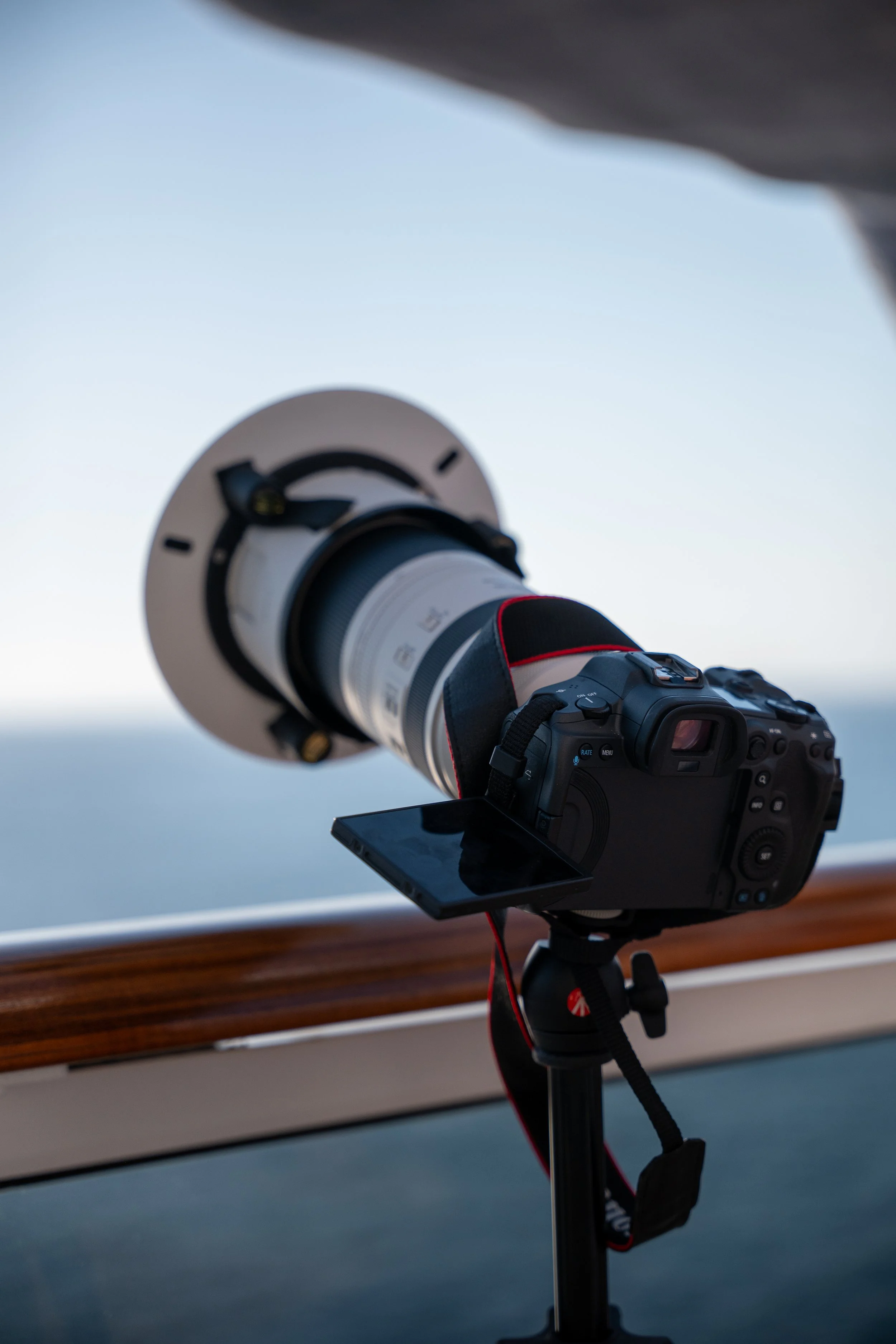
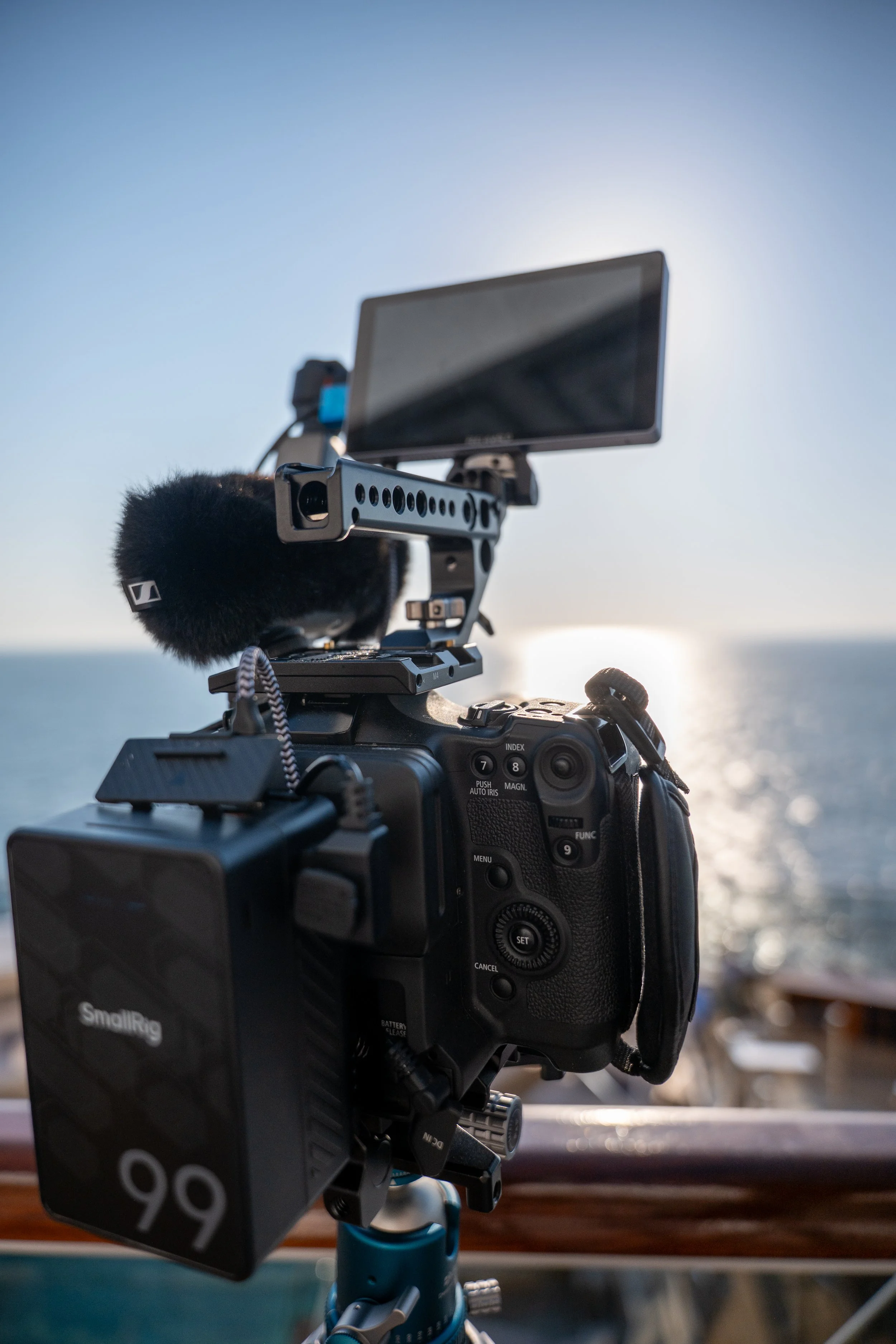
I'd brought several cameras so that I wasn't relying on a single approach. Some were recording the wider scene and the experience aboard the ship; others were concentrated almost entirely on the Sun.
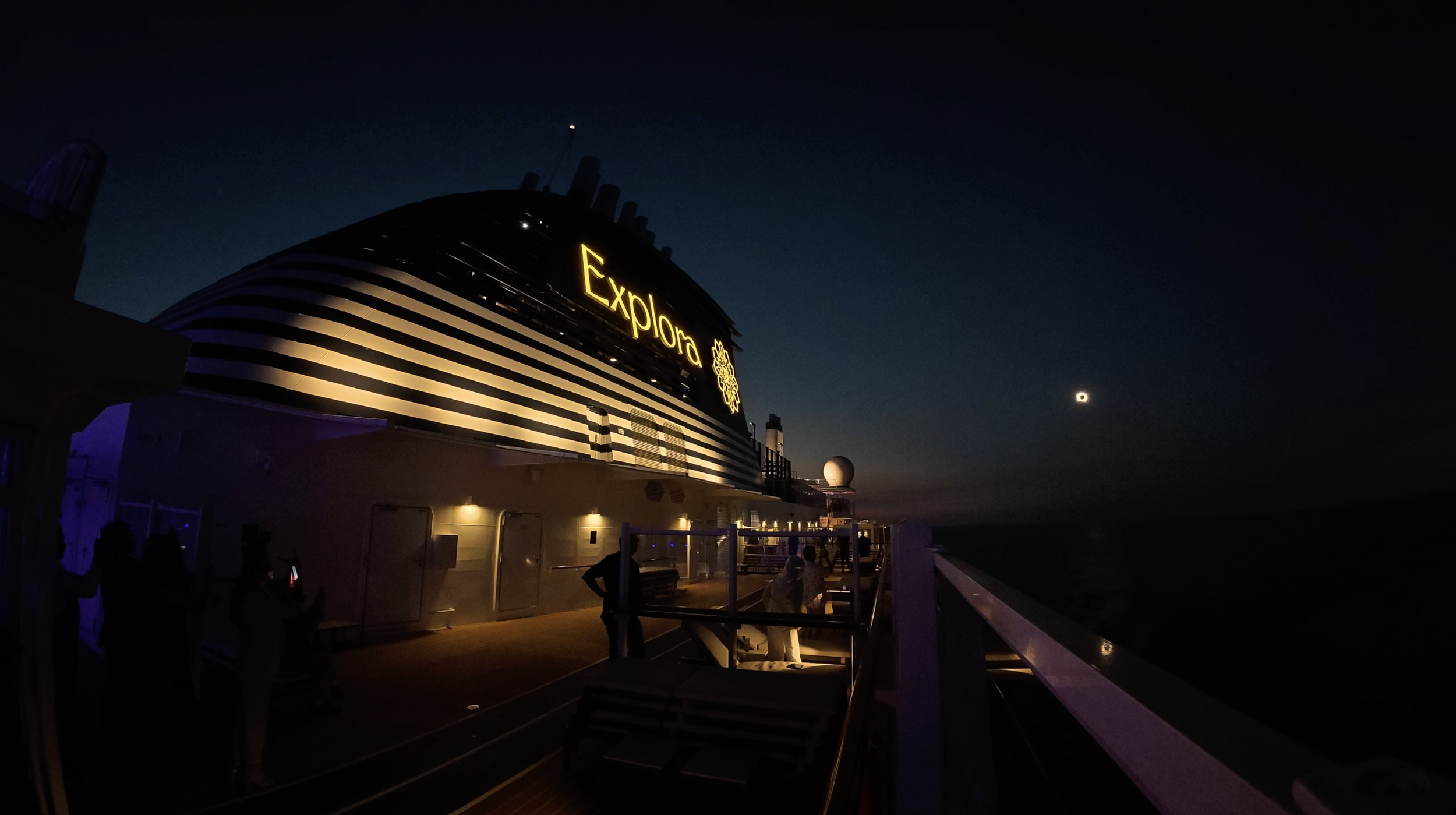
The most tightly framed images became an unexpected record not only of the eclipse, but of Explora III itself.
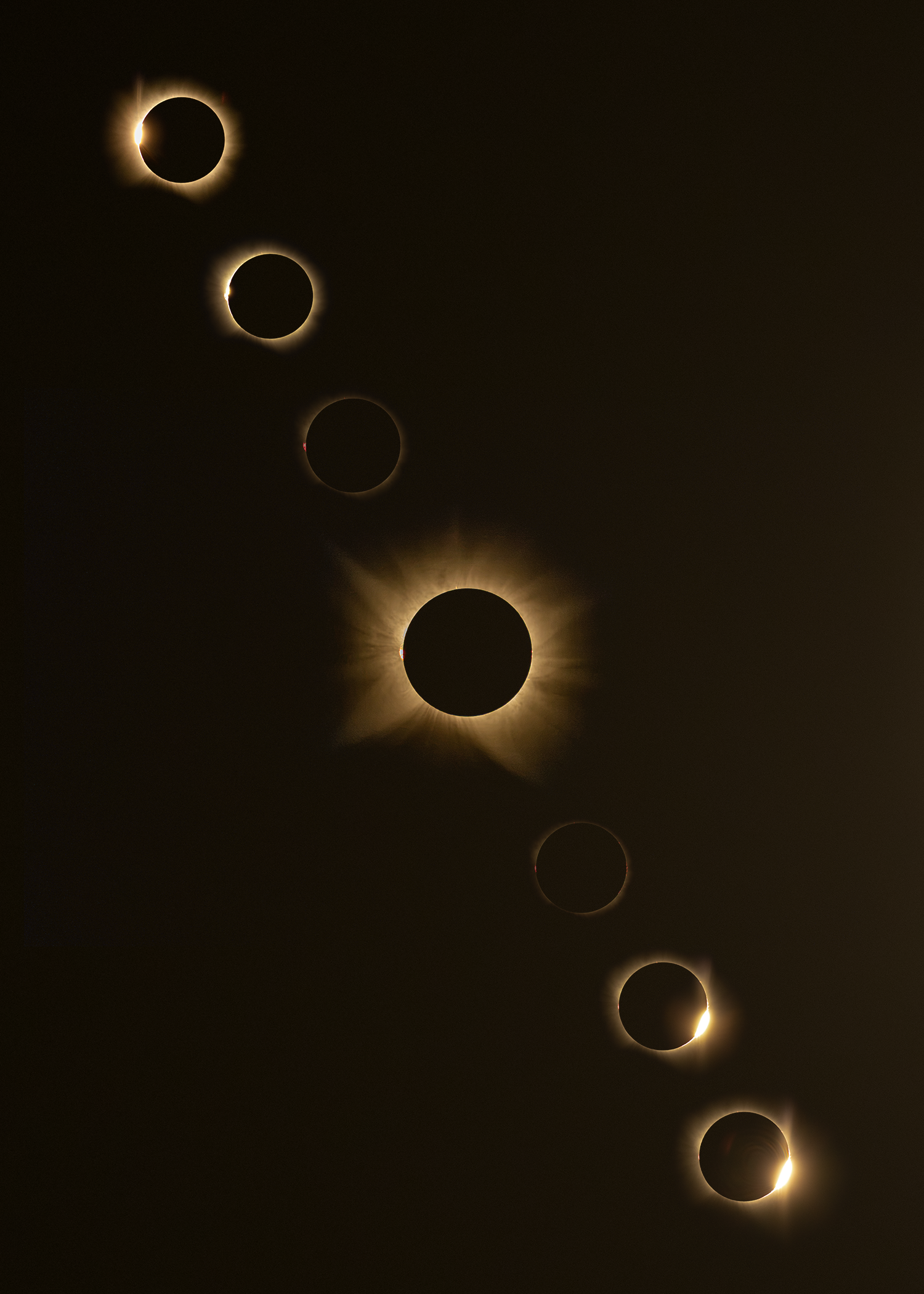
Each exposure captures a moment in the astronomical sequence, but when those frames are placed together the Sun appears to wander across the composition.
A hundred and six seconds
From our position offshore, totality lasted approximately one minute and forty-six seconds.
That sounds reasonably long until you're inside it.
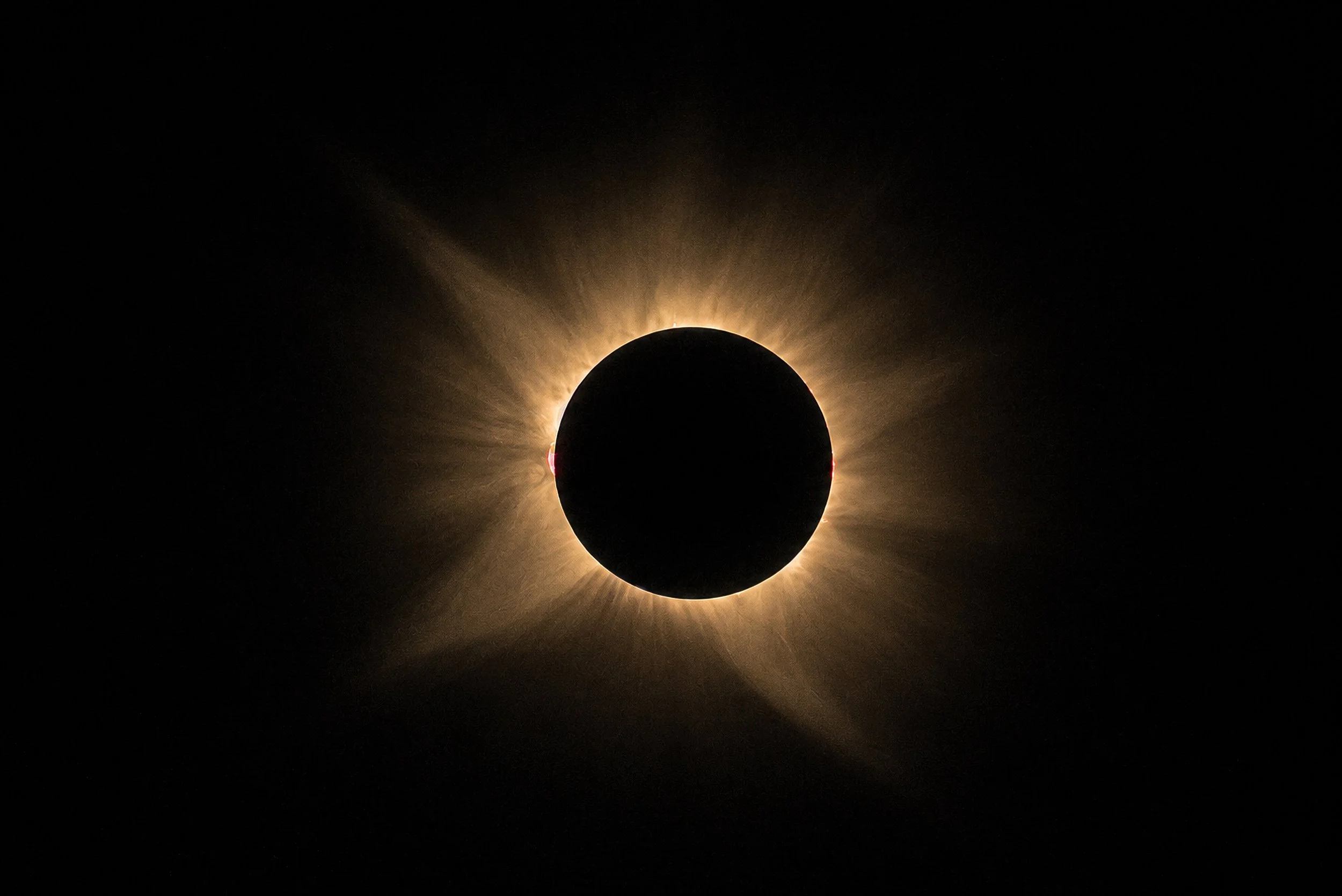
The final sliver of photosphere disappeared. Daylight collapsed remarkably quickly. The black disc of the Moon sat where the Sun had been and the corona appeared around it, huge, delicate and structurally unlike the compact white circle we normally imagine when we think of the Sun.
For those few moments, the familiar object at the centre of our Solar System became something completely different.
And because we were at sea, the eclipse existed in an enormous landscape.
There were no buildings, mountains or trees around us. Just ocean, horizon, ship and shadow.
After spending so much time talking about the mechanics of eclipses, I found that scale particularly powerful. The science explains perfectly what is happening, but knowing the explanation doesn't diminish the experience.
We were standing on a rotating planet, travelling around a star, while a moon travelling around us briefly placed itself with extraordinary precision between the two.
And we could watch the geometry happening.
The images I didn't expect
Some of my favourite photographs from the voyage aren't conventional eclipse photographs.
One sequence follows the changing Sun across the frame: diamond ring, corona, prominences and the return of sunlight, each stage displaced slightly by the motion of the ship.
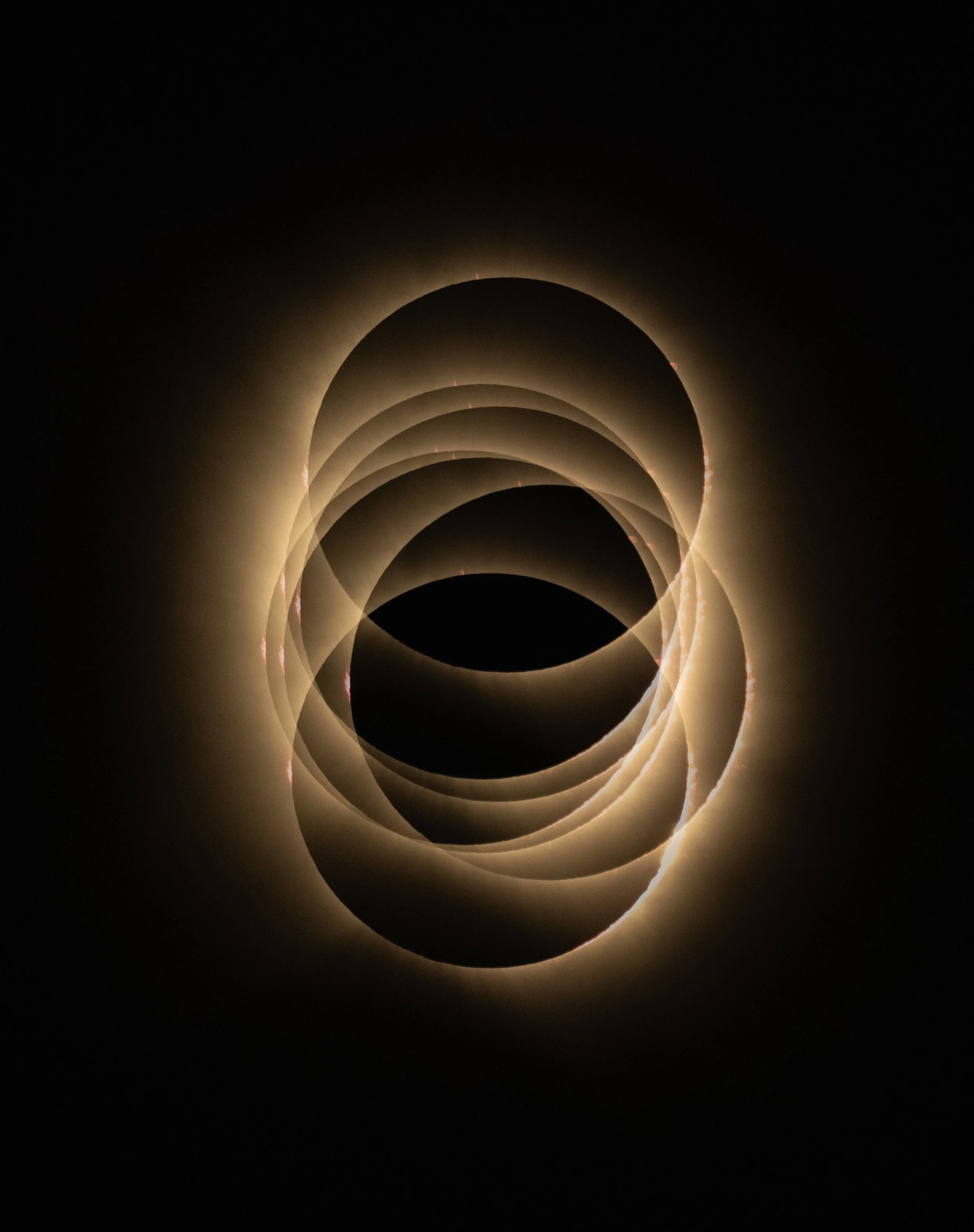
Another overlays consecutive moments of totality. Instead of correcting the movement and forcing every frame into perfect alignment, I left the displacement visible.
The ship's movement becomes part of the story.
I've started thinking of that image as Eclipse Adrift.
It's less a scientific record of what the eclipse looked like from a fixed point and more a record of what it felt like to try to observe something celestial from the ocean.
Astronomy often encourages us to imagine ourselves as stationary observers looking outward at a moving universe.
We aren't.
The Moon was moving.
The Earth was rotating.
Explora III was travelling across the Atlantic.
And I was standing on its deck trying to keep a 600mm lens pointed at the same patch of sky.
The resulting photographs contain all of those movements.
What remains
By the time the last partial phases disappeared and the Sun returned to something resembling normal, the entire event had lasted less than two hours.
Totality itself had occupied only 106 seconds.
But that small window was the culmination of months of planning, calculations, equipment choices, diagrams, rehearsals and conversations.
That is perhaps what I will remember most about photographing the eclipse from Explora III.
I arrived wanting to document a celestial event.
I came away with something slightly different: a record of an astronomical event and of the act of trying to observe it.
The photographs aren't perfectly still because neither were we.
And somehow, that feels much more appropriate.